Skip to content
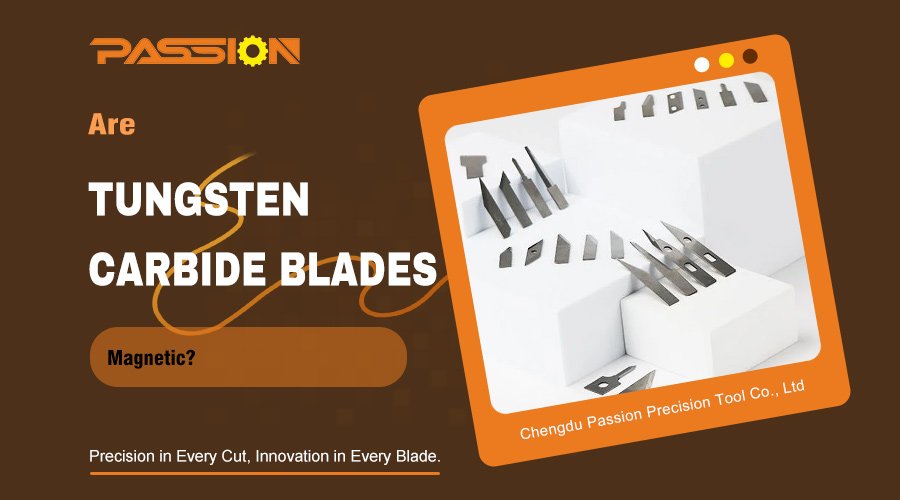
Struggling to understand why some carbide blades attract a magnet? This confusion can lead to incorrect material choices. The answer lies in the blade's binder, not the carbide itself.
Pure tungsten carbide1 is not magnetic. However, industrial tungsten carbide blades are composite materials containing a metal binder like cobalt, nickel, or iron. The blade's magnetism comes from this binder, so a blade with a cobalt or iron binder will be magnetic, while one with a nickel binder will not.
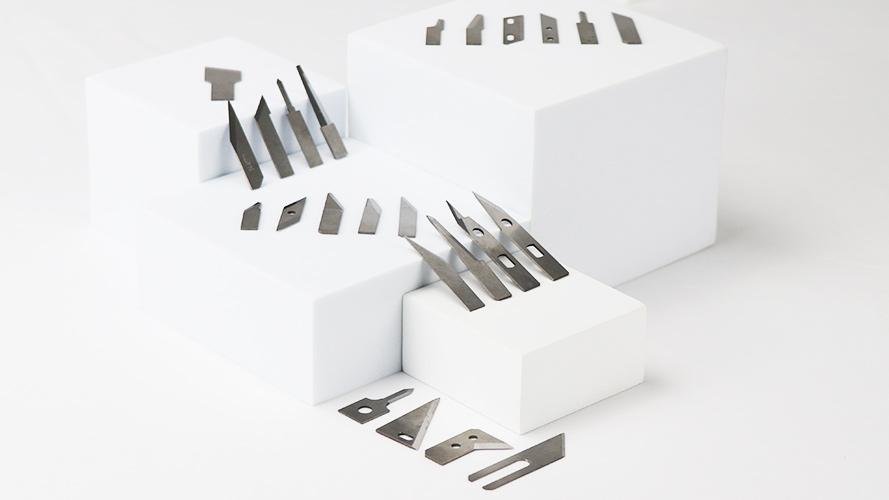
This simple magnetic test might seem like a small detail, but it has huge implications in the real world. I've seen it solve problems for clients and, when ignored, cause major production headaches. Understanding why this happens is key to selecting the right blade for your specific job. So, let’s explore how this property affects performance and how you can use this knowledge to your advantage.
Why Does The Binder Material Change The Blade's Magnetism?
You think all tungsten carbide is the same material. But this assumption can lead you to choose the wrong blade. You can avoid this by learning how different binders work.
Binders like cobalt (Co) and iron (Fe) are strongly magnetic, making the blade change The blade's magnetism.

In my experience, I've found that the term "tungsten carbide" can be a little misleading. We are never dealing with pure tungsten carbide, which is a ceramic-like powder. Instead, we use what's called cemented carbide. This is a composite material where hard tungsten carbide grains are held together, or "cemented," by a softer metal binder. The choice of binder is critical because it defines many of the blade's key properties, including its toughness2, corrosion resistance3, and, of course, its magnetism. Cobalt is the most common binder because it provides excellent wear resistance and toughness, making it great for general-purpose cutting. Blades with a cobalt binder will have a noticeable magnetic pull. Nickel is used when corrosion resistance is more important than toughness.
Comparing Common Binders
| Binder Metal | Magnetic Property | Key Advantage | Common Application |
|---|---|---|---|
| Cobalt (Co) | Strong | High Toughness & Wear Resistance | General Cutting, Metal, Wood |
| Nickel (Ni) | Weak to None | High Corrosion Resistance | Food Processing, Chemical |
| Iron (Fe) | Strong | Cost-Effective (Less Common) | Specific Niche Applications |
This difference is something I discuss with clients every day. A simple magnetic check can tell you a lot about the blade you are holding.
Can You Use A Magnet To Identify A Tungsten Carbide Blade?
You need to quickly tell a steel blade from a carbide one. Mixing them up can damage your machinery or ruin your product. A simple magnet test can be a useful first step.
Yes, a magnet is a great informal test. High-speed steel (HSS) blades are mostly iron, so they are strongly magnetic. Tungsten carbide blades usually have a much weaker magnetic pull, or sometimes none, which helps you tell the difference in a busy workshop.

I remember a case with a client in Germany who runs a large facility for cutting automotive textiles. His team was having a recurring problem. They were accidentally mixing their older High-Speed Steel (HSS) blades with the new, longer-lasting tungsten carbide blades we had supplied. This mistake was causing unplanned machine downtime because the HSS blades wore out much faster, but looked very similar. I shared a simple trick with him. Using a small magnet, gently touch the blade. If the magnet sticks firmly to the blade, it's made of high-speed steel; if the magnet sticks much less strongly, it's a tungsten carbide blade.
The Magnet Test In Practice
| Material Type | Magnetic Response | Reason |
|---|---|---|
| High-Speed Steel (HSS) | Very Strong | Composed primarily of iron |
| Tungsten Carbide (WC-Co) | Weak to Moderate | Magnetism comes only from the cobalt binder |
This simple demonstration was a game-changer for them. They implemented the "magnet test" as a standard practice for sorting blades. It dramatically reduced mix-ups and improved their operational efficiency. I always tell my clients that this is a great practical sorting tool, but not a definitive scientific analysis. It helps prevent simple, costly errors on the production floor.
Are There Non-Magnetic Tungsten Carbide Blades For Special Applications?
Your application is sensitive to magnetism, like producing electronic parts. A standard blade could ruin your entire production run. Specialized non-magnetic carbide blades are the solution.
Absolutely. For industries like electronics or manufacturing magnetic tape, we use tungsten carbide with a nickel (Ni) binder. Since nickel is very weakly magnetic, the final blade is considered non-magnetic. It is safe for use in these magnetically sensitive environments.
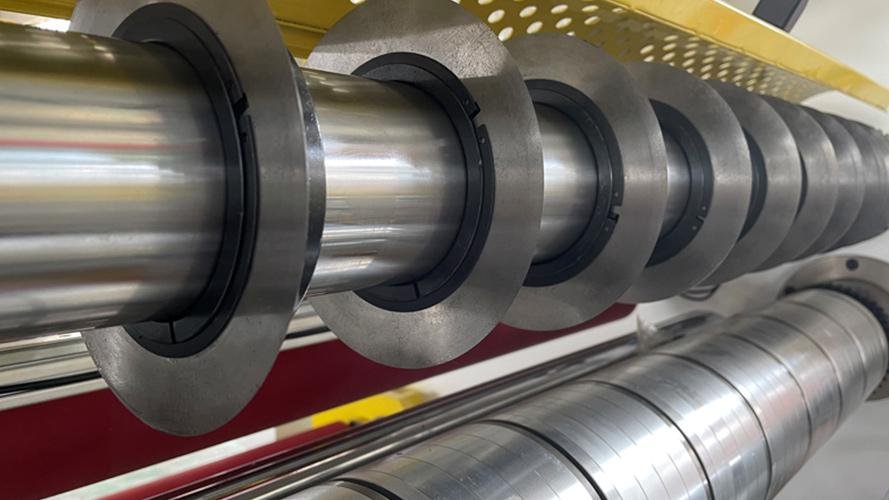
This issue came up with a client in South Korea who manufactures high-precision components for data storage devices. They were using standard WC-Co blades and experiencing unusually high product failure rates. After some investigation, we realized their problem. The slight magnetism from the cobalt binder in the blades was creating magnetic interference during the cutting process. This was corrupting the sensitive magnetic media they were producing. They needed a blade with all the hardness of tungsten carbide but without any magnetic properties. The solution was to design a custom blade for them using a nickel binder. Nickel provides excellent corrosion resistance and its magnetic signature is so low it's considered non-magnetic for industrial purposes.
Choosing The Right Blade For Sensitive Jobs
| Blade Type | Binder | Magnetic Property | Ideal Application |
|---|---|---|---|
| Standard Blade | Cobalt (Co) | Magnetic | General purpose, metal cutting, packaging |
| Specialized Blade | Nickel (Ni) | Non-Magnetic | Electronics, food processing, medical devices |
We manufactured a batch of WC-Ni blades for them. After they switched, their product rejection rate dropped to almost zero. This case was a perfect illustration that the "tungsten carbide" label isn't enough. The specific grade, and especially the binder, is what determines the blade's success in a specialized application. Understanding this helps us deliver true precision for every cut.
Conclusion
A tungsten carbide blade's magnetism is all about its metal binder, not the carbide itself. This detail is crucial for blade identification, proper selection, and top performance in specialized industries.
Explore the unique properties of tungsten carbide to understand its applications and benefits in various industries. ↩
Understand the concept of toughness in materials and its significance in manufacturing and engineering. ↩
Learn about the importance of corrosion resistance in material selection for various industrial applications. ↩