Skip to content
Custom Knife Blade
In addition to the production of industry standard parts, “PASSION” can also be customized for you according to your drawings, so many years, super customized production capacity has been an important factor that we can get better and better in this industry.
The Blade Customization Process
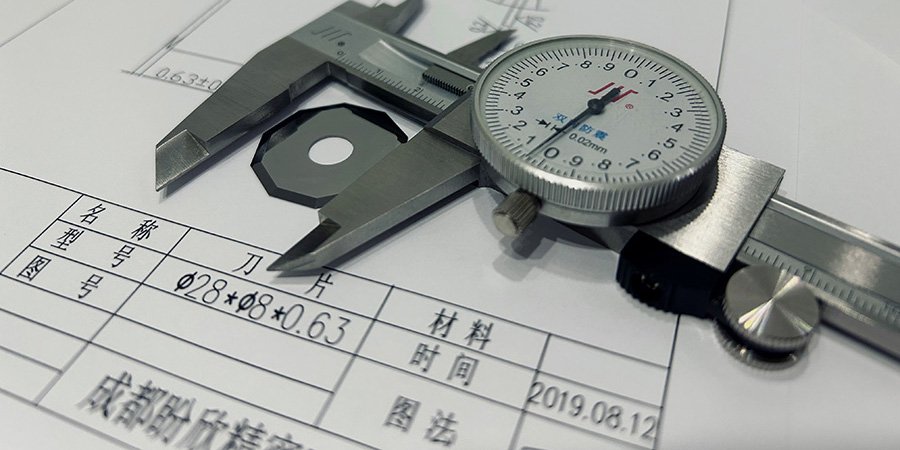
1、Offering drawing or sample
- If you can offer detailed drawings, it is good.
- If you have no drawing, you are welcome to ship original samples to us.

2、Making production drawing
- We make standard production drawings according to your drawings or samples.

3、Confirming drawing
- We confirm the size, tolerance, sharp edge angle and etc by both sides.

4、Material request
- You request the material grade directly.
- If you have no idea on the material grade, you can tell us the usage of the product.
- If you give us samples, we can do the material analysis on samples and make the same grade with the samples.
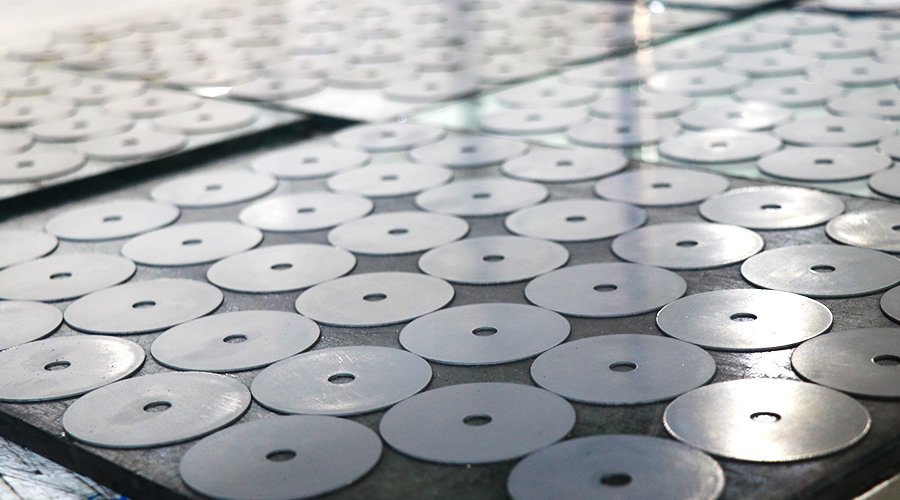
5、Production
- Preparing the blank, tool and auxiliary materials.
- Product processing--semi-finished, or finished etc.
- Quality Control.
- Cleaning & Finished products warehousing.
- Package & Shipping.
Let's Talk About Your Cutting Needs
Please provide the size,thickness and hardnessus of the material you want to slitting, along with the functons you need (e.g., full cut, half cut, indentation, grooving, etc.) With this information, we will quickly get back to you with a detailed solutions and quotes. Act Now
What Are The Key Parameters For Custom Industrial Blades?
To ensure you receive an accurate quote and a blade that performs perfectly, providing your supplier with precise and comprehensive data is essential. Here is a guide to the key parameters required for customizing blades.
No.1
Universal Parameters (Applicable to Most Blade Types)
Blade Material
Specify the desired material (e.g., SKD-11, SKH-51, Tungsten Carbide). If unsure, describe the application (what material is being cut, cutting speed, etc.), and the supplier can recommend a suitable material.
Hardness (HRC)
Specify the required hardness rating on the Rockwell C scale (HRC). This is crucial for balancing blade toughness and wear resistance.
Blade Edge Geometry
Edge Type: Single Bevel (one-sided grind) or Double Bevel (two-sided grind).
Edge Angle: Provide the specific angle(s) for the cutting edge (e.g., A1, A2 as shown in the original image).
Dimensional Tolerances
Specify the acceptable deviation for critical dimensions (e.g., thickness ±0.01mm). Tighter tolerances ensure higher precision but may increase cost.


No.2
Blade-Specific Parameters
Circular Blades / Circular Knives
You will need to provide the basic dimensions: Outer Diameter (OD), Inner Diameter (ID), and Thickness. If the blade has mounting holes, specify their quantity, diameter, and distribution pattern. For toothed blades (saw blades), also include the Tooth Profile (shape), Tooth Pitch (distance between teeth), and Tooth Depth.
Guillotine / Straight Blades
Specify the basic dimensions of Overall Length, Width, and Thickness. For mounting holes, detail their type (e.g., round, countersunk), size, and spacing. It is critical to state the countersink direction for single-bevel blades to ensure correct installation. If the blade is toothed (serrated), also provide the Tooth Profile, Tooth Pitch, and Tooth Depth.
Slotter Blades
Clarify the blade shape (full circle or arc segment) and provide its key dimensions, such as Diameter or Arc Length, Height/Width, and Thickness. You also need to describe the required Tooth Profile or serration pattern (e.g., Straight, DTC, DTK).

No.3
The Most Reliable Method: Providing a Drawing or Sample
Providing a Technical Drawing
A complete technical drawing acts as a definitive blueprint, leaving no room for error. An ideal drawing includes all key parameters: precise dimensions, required tolerances, material specifications, HRC hardness, bevel angles, surface finish requirements, and mounting hole details. Common file formats like PDF, DWG, DXF, or STEP are all acceptable.
Sending a Physical Sample
When a drawing isn’t available, a physical sample is an excellent alternative. The supplier will use it for reverse engineering—meticulously measuring every aspect to create a precise manufacturing drawing. However, it is absolutely essential that you provide a new, unused sample. A used blade, even with minor wear, will have altered dimensions and a degraded edge profile. Replicating a worn-out blade means manufacturing a flawed product from the very beginning.
When No Drawing or New Sample is Available
In a situation where you have neither, active collaboration with your supplier is key. You can provide a used sample, along with detailed descriptions or videos of your cutting application. Explain what material is being cut and any performance issues you’re facing (e.g., “the blade chips easily”). This allows the supplier’s engineering team to not only replicate the design but also analyze and potentially improve it for better performance and a longer lifespan.
Choosing the Right Industrial Blade Supplier?
Choosing the right industrial blade supplier is a critical decision that impacts not only machining efficiency and equipment lifespan but also your overall production costs. This guide analyzes the four main types of suppliers to help you make an informed choice.
Advantage
Lower Price: Eliminate intermediate links, suitable for bulk is purchasing, bargaining space.
Technical Guarantee: We can directly interface with the R&D team to provide customized requirements (e.g., special coatings, edge design, special material blades).
Stable Quality: The products have gone through original quality inspection, provide material certification and life test report, reduce the risk of use.
Long-term Cost Advantage: low unit price when purchasing in large quantities and high tool durability.
Disadvantage
High MOQ: MOQ is usually required, which is difficult for small businesses or sporadic demand to meet.
Long Delivery Cycle: customized or imported blades take 15-30 days, difficult to meet urgent orders; non-standard products need to be rescheduled, regular products may also be delayed due to order priority.
Applicable Scenarios
long-term stable procurement of large enterprises, non-standard customization needs, cost-sensitive and large order size.
Advantage
High Flexibility: support small batch is purchasing (such as a single box of 10 pieces of sales), can be mixed batch of different models.
Multi-brand Optional: agent of multiple brands, easy to compare performance and price.
Fast Response: Sufficient inventory, support for urgent orders, regular blades shipped the same day, shorten delivery time.
Disadvantage
Higher Price: markup is usually 10%-30%, and the cost of purchasing is significantly higher than that of direct purchase.
Technical Dependence On The Agent's Ability: If the agent's engineers are not experienced enough, they may not be able to solve complex problems.
Quality Control Depends On Experience: you need to choose a reputable distributor to avoid counterfeit or refurbished blades.
Inventory Risk: Best-selling models are easily out of stock, cold models need to be transferred, and the timeframe is unstable.
Applicable Scenarios
Small and medium-sized enterprises with many varieties and small batches are purchasing, strong technical dependence, and the need for rapid response to the customer.
Advantage
Regionalized Service: Local warehousing, self-pickup or same day delivery for urgent needs.
Convenient Procurement: We also provide fixtures, toolholders, coolant and other consumables, one-stop shopping saves time and reduces supplier management costs.
Low Threshold Purchasing: Supporting piecemeal purchasing, no minimum order quantity restriction, suitable for individual users or maintenance replacement.
Disadvantage
Limited Models: Mainly general-purpose models, special specifications need to be booked.
Non-transparent Price: High retail markup, may be 5%-15% more expensive than distributors.
Weak Technical Capability: usually no professional tool engineers, difficult to provide process optimization support.
Applicable Scenarios
Temporary replenishment for small and micro customers, laboratory testing, small-scale maintenance, orders with very high requirements for timeliness and decentralized purchasing categories.
Advantage
Transparent Price: Convenient platform price comparison (e.g. Alibaba, Amazon), many promotional activities.
Convenient Purchasing: online ordering, support small batch trial order (e.g. 10 tablets), fast delivery time.
Globalized Sources: Can purchase overseas low-priced brands.
Disadvantage
Quality Risk: Counterfeits and refurbished blades are mixed (especially in unauthorized stores).
Difficulty After-sale: long return and exchange process, quality disputes require third-party testing.
Lack Of Technical Support: no on-site service, relying on self-debugging, increased risk of processing accidents due to mispurchase of models.
Hidden Costs: international logistics tariffs and shipping costs may offset the price advantage.
Applicable Scenarios
Trial orders for startups, standard blade procurement, budget-sensitive small and medium-sized enterprises, price-sensitive and risk-controllable orders.
Prioritization
Long-term stable demand - choose manufacturer (cost-optimal).
Multi-species technology dependence - choose head distributor
Urgent and sporadic purchases - local retailer or platform flagship store (balancing timeliness and fidelity)
Risk control
Online store purchases need to verify the authorization qualification, and give priority to the brand's own store.
Assess the technical team background of the reseller (e.g. whether there are certified engineers).
Regardless of the channel, it is necessary to verify the material of the tool (such as tungsten steel blades need to be accompanied by an elemental analysis report), check the packaging anti-counterfeiting mark, to avoid buying recycled refurbished blades.