Skip to content
Guillotine Blade
PASSION manufactures and supplies standard and custom sized precision guillotine knives and blades. Whether you or your customers use them for paper cutting, food slicing, packaging, rubber processing, meat cutting, film cutting, foil processing, or any other application, PASSION can turn your design into a blade in no time.
The Guillotine Blade PASSION Offers You
Guillotine blades are commonly used in production lines and are usually made of carbon steel to ensure durability. Guillotine blades are available in toothless, toothed, serrated, scalloped, and perforated shapes to meet different cutting needs.


Compatible Guillotine Blades Machine Brands
We manufacture high-precision guillotine blades for the corrugated industry, compatible with leading brands like BHS, Agnati, Fosber, and Mitsubishi. If your machine is not listed, we can custom-manufacture blades to your OEM specifications. Just provide the drawing or parameters for a quick quote.


Let's Talk About Your Requirements
PASSION is highly specialized in manufacturing custom guillotine knives and blades from samples and drawings. If you need knives and blades manufactured to your specific requirements, contact us today to find out how we can manufacture high quality knives and blades that exceed your requirements at competitive prices!
What Is A Guillotine Blade?
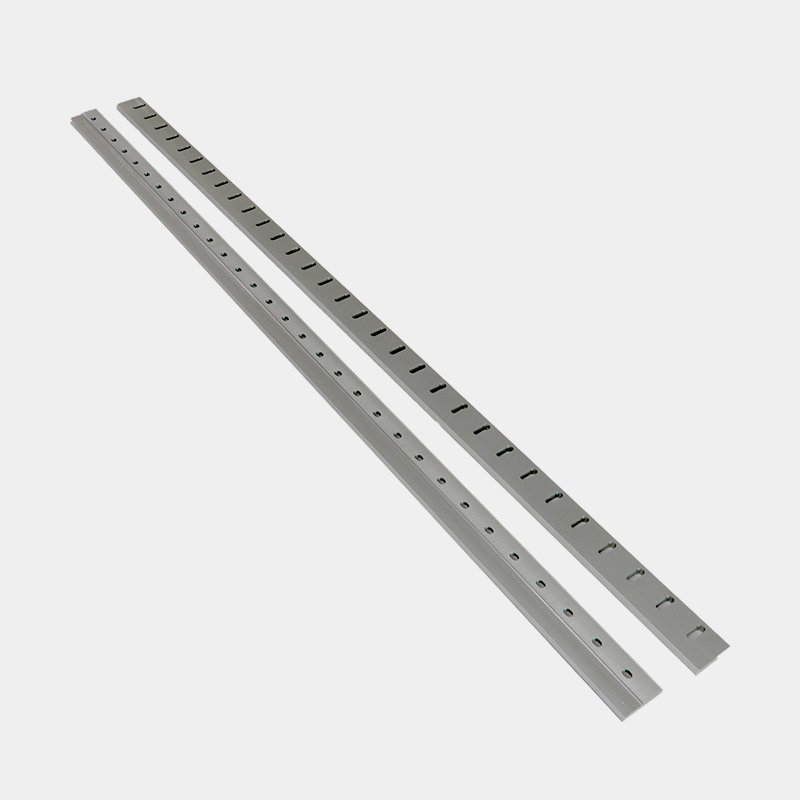
A guillotine blade, also known as a shear blade, is a long, straight tool for precision industrial cutting. Though named after the classic vertical chopper, modern applications use a progressive shearing action. The blade is often angled to slice smoothly through material, ensuring a clean, burr-free cut with minimal force, ideal for high-volume production.
Guillotine blades are indispensable across many industries. In paper mills and printing, they trim large stacks of paper and cardstock. In metal fabrication, they efficiently shear sheet metal and plates. They are also critical in the plastics industry for cutting films and rigid sheets, and in woodworking for slicing thin veneers with exceptional accuracy.
A blade’s performance and longevity depend on its material. They are typically crafted from robust tool steels like D2 for wear resistance, or High-Speed Steel (HSS) for high-temperature shearing. For the most demanding jobs, blades with an inlaid tungsten carbide edge are used to provide extreme hardness and extended operational life before needing to be reground.
Common Materials For Guillotine Blades?
Choosing the right material ensures that guillotine blades are able to cope with different cutting challenges, providing the right balance of sharpness, durability and wear resistance according to the specific requirements of the application. Here are some common materials used for guillotine blades:
HSS-inlay (High-Speed Steel Inlay)
High-Speed Steel inlays are often used in guillotine blades to enhance cutting performance. The inlay provides a hardened cutting edge while maintaining the toughness of the base material. HSS-inlays offer excellent resistance to heat and wear, making them ideal for high-speed cutting tasks, especially in operations that require precise, consistent cuts over time.
TCT-inlay (Tungsten Carbide Tip Inlay)
TCT-inlays are made from tungsten carbide, a highly durable material known for its hardness and resistance to wear. The inlay is applied to the blade’s edge to improve its ability to cut through tough or abrasive materials. These blades are ideal for cutting hard metals, plastics, and other high-resistance materials, providing extended blade life and superior cutting performance.
ASP-inlay (Advanced Special Plastic Inlay)
ASP stands for Anti-Segregation Process, a type of high-performance Powder Metallurgy (PM) Steel. It is NOT plastic. This advanced steel is created by atomizing molten metal into a powder, which is then fused under extreme pressure and heat. This process results in an incredibly fine and uniform grain structure, giving the blade an exceptional combination of high wear resistance and toughness, surpassing traditional tool steels.
Solid High-Speed Steel (HSS)
High-Speed Steel is a common material used in guillotine blades due to its ability to retain hardness and cutting ability at elevated temperatures. HSS is suitable for a wide range of cutting applications and provides excellent durability, making it a versatile choice for industrial cutting blades. It is often used in general-purpose guillotine blades that need to perform in high-speed, high-volume environments.
How to Install A Guillotine Blade?
Preparation And Safety First
Wear appropriate PPE such as cut-resistant gloves, safety goggles, and protective clothing.
Power off the machine and disconnect it from the power source to prevent accidental startup during installation.
Ensure the work area is clean and organized to prevent any materials or debris from interfering with the installation.
Remove The Old Blade
Unlock or release the blade holder using the machine’s manual controls or by following the machine’s procedure.
Remove any securing bolts or fasteners holding the old blade in place using the appropriate tools, such as wrenches or screwdrivers.
Carefully remove the old blade, ensuring that it does not make contact with your body or other surfaces.
Install The New Blade
Position the new guillotine blade into the blade holder or cutting mechanism, ensuring it is properly aligned with the machine’s cutting path.
Secure the blade by tightening the mounting bolts or fasteners, making sure the blade is tightly and securely held in place. Do not overtighten, as it may damage the blade or mounting system.
Check the alignment of the blade to ensure it is level and correctly positioned for optimal cutting performance.
Check Blade Sharpness And Condition
Confirm the blade matches your machine and inspect it for any shipping damage. The manufacturer’s protective coating on the cutting edge should be intact and flawless.
Inspect a reground blade carefully. Run a gloved finger along the edge to feel for nicks or burrs, and visually check the surface and bolt holes for cracks or fatigue.
Never install a compromised blade. Using a damaged blade can result in poor cutting quality, machine damage, and serious safety risks.
Test The Machine
Manually cycle the machine (if possible) to ensure that the blade moves freely and the cutting mechanism operates smoothly.
Perform a dry run by cutting scrap material to verify the blade is cutting cleanly and the machine functions as expected.
What Are Guillotine Blade Safety Guidelines?
When using guillotine blades in industrial machines, safety is crucial to prevent accidents and ensure proper operation. Here are key safety precautions to follow:
Personal Protective Equipment
Always wear appropriate PPE, such as cut-resistant gloves, safety goggles, and steel-toed boots. These protect against potential blade contact and flying debris during operation.
Safe Operating Practices
Never place hands or any body part near the cutting area during operation. Always ensure the material being cut is properly positioned and secured before activating the machine. Use push sticks or other tools to handle materials safely near the blade.
Training And Supervision
Ensure all operators are properly trained and authorized for the specific machine. Training must cover machine controls, safety features, jam-clearing procedures, and emergency protocols.
Machine Guards And Shields
Verify that all machine guards, light curtains, and physical shields are in place and functioning correctly before every use. Never operate a machine with safety features bypassed or removed.
Clear Work Area
Keep the work area clean, organized, and free from obstructions. Ensure the floor is dry and clear of debris to prevent slips, trips, and falls, especially around the machine’s operational zone.
Lockout/Tagout (LOTO) Procedures
Before any maintenance, blade replacement, or clearing of a major jam, always follow strict Lockout/Tagout procedures. This involves completely de-energizing and disconnecting the machine from its power source to prevent accidental startup.
Blade Maintenance and Inspection
Regularly inspect the blade for signs of damage such as cracks, chips, or dullness. A damaged or dull blade requires more force to cut, increasing the risk of malfunction and poor cut quality. Handle blades with extreme care, using proper lifting devices.
Regular Machine Inspections
Perform routine inspections of the entire machine, checking the blade’s alignment, hydraulic systems, electrical components, and fasteners. This proactive approach helps prevent unexpected failures.
Emergency Preparedness
Emergency Stop Mechanism Know the precise location of all emergency stop buttons and confirm they are functioning. Operators must be able to halt the machine instantly in an emergency to prevent or mitigate injury.
Types of Mounting Holes for Guillotine Blades?
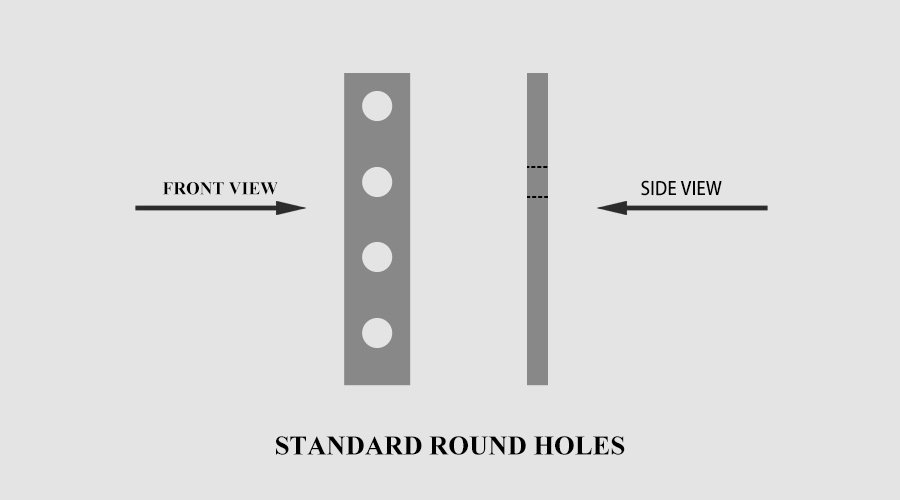
Standard Round Holes: The Simple & Reliable Solution
Description: Uniformly round through-holes, designed to be perfectly matched with mounting bolts or locating pins.
Advantages: Simple to manufacture and easy to install. They offer excellent shear resistance, making them ideal for high-load applications like heavy-duty, continuous cutting. The rigid fixing ensures maximum stability.
Limitations: Offers no possibility for fine-tuning the blade’s position. Perfect alignment is entirely dependent on the precision of the machine and the blade itself.
Best For: Fixed cutting stations in highly automated assembly lines where the blade must remain stable for long periods without adjustment.

Elliptical Holes: The Choice for Flexible Adjustment
Description: Oblong or slot-shaped holes that provide additional space for adjustment along the length of the blade.
Advantage: Supports position fine-tuning within ±5mm, responding to the needs of multi-size cardboard processing.
Precautions: Due to the non-positive fit, these holes require anti-loosening hardware, such as spring washers, nylon-insert lock nuts, or double nuts, to prevent bolt displacement caused by vibration.
Best For: Flexible production lines in small and medium-sized carton factories where frequent changeovers or adjustments are necessary.
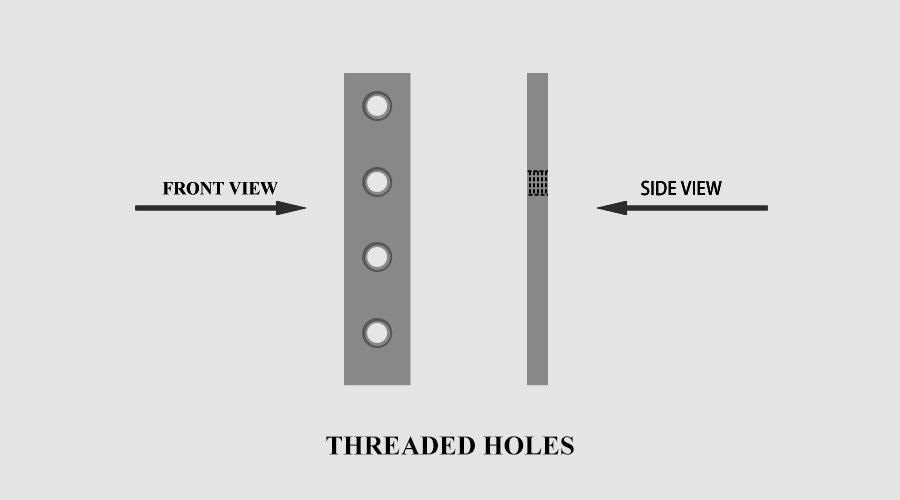
Threaded Holes: For Simplified & Lightweight Installation
Description: The holes are pre-threaded (tapped) to accept a screw directly, eliminating the need for a nut.
Advantages: Simplifies the installation process by eliminating the need for nuts and washers, which is especially useful in space-constrained designs.
Limitations:The threads in the blade material are prone to wear, especially with frequent assembly/disassembly or high vibration. (maintenance every 500 hours is recommended).
Best For: Light-duty slitting machines or temporary processing setups with lower loads and less frequent adjustments.

Countersunk Holes: Balancing Safety & a Flush Finish
Description: The hole features a conical recess (a countersink) that allows the head of a flat-head screw to sit flush with or below the blade’s surface.
Advantage: Avoids the bolt protrusion from scratching the cardboard or interfering with other parts, especially suitable for precision cutting.
Limitations: Requires the use of specific countersunk screws. Overtightening can damage the conical seat or even crack the blade, so controlled torque is essential during installation.
Best For: High-end gift box production lines or any application where a flawless surface finish on the cut material is a top priority.

Eccentric Holes: For High-Precision Dynamic Compensation
Description: The center of the hole has a pre-set offset relative to a central datum. Compensation is achieved by using special eccentric bolts or bushings that, when rotated, minutely shift the blade’s position.
Advantage: Allows for extremely fine, high-precision adjustments (often in the sub-millimeter range) without fully disassembling the tool.
Precautions: The initial setup requires careful calibration. The offset position may need periodic re-calibration to account for cumulative errors or significant wear.
Best For: Precision die-cutting machines and automated equipment that require dynamic compensation for tool wear to maintain consistent accuracy over long runs.

Shaped Holes: A Custom Solution For Anti-Rotation
Description: Non-standard hole shapes, such as squares, polygons, or other custom profiles, designed to match a specific mounting interface.
Advantages: Completely eliminates the risk of blade rotation under torsional stress, a risk that exists with round holes. It provides a positive, locked-in fit.
Precautions: Requires in-depth communication with the equipment manufacturer. Custom tooling leads to higher initial costs and potentially longer lead times.
Best For: High-speed, high-torque die-cutting machines or customized production lines where rotational stability is absolutely critical.
How To Choose The Right Mounting Hole: 4 Key Principles
Matching Equipment Interface
The first priority is to select a blade that matches your machine’s existing mounting pattern. Forcing a a blade with standard holes onto a machine designed for slotted holes will result in misalignment and poor performance.
Evaluate The Load And Adjustment Frequency
High Load, Low Adjustment: Standard round holes combined with high-strength alloy bolts offer the best stability.
High Frequency, High Precision: Eccentric holes with a precision adjustment kit are the most efficient choice.
Concerned About Maintenance Cost
While threaded holes are easy to install, thread repair costs can be high. Eccentric holes offer precision but require specialized personnel and periodic calibration. Standard holes are the lowest maintenance option.
Reserve Room For Expansion
For users who may upgrade their precision machining needs in the future, it is recommended to layout the eccentric hole design in advance.