Skip to content

Struggling with blade performance1 issues like premature wear? You might be overlooking a critical quality check. The solution is simpler than you think and starts with one key test.
The Rockwell Hardness Test measures a blade's resistance to indentation. It involves applying a minor load, then a major load, and measuring the indentation depth. A shallower indent means a harder material, which is crucial for determining a blade's durability and wear resistance.

Understanding the basics is a great start. But the real value comes from applying this test correctly in different situations. Let's explore why this test is so vital for your operations and how to get it right every time. It’s about more than just a number; it’s about performance.
Why Is Rockwell Hardness Crucial For Blade Performance?
Are your blades wearing out too fast? This frequent downtime costs you money. The problem might be inconsistent material hardness, a factor you can easily control with proper testing.
Rockwell hardness directly impacts a blade's wear resistance2 and toughness3. A blade with the correct, consistent hardness will hold its edge longer and resist chipping. This ensures reliable performance, extends blade life, and reduces operational downtime, making it a critical quality control metric.
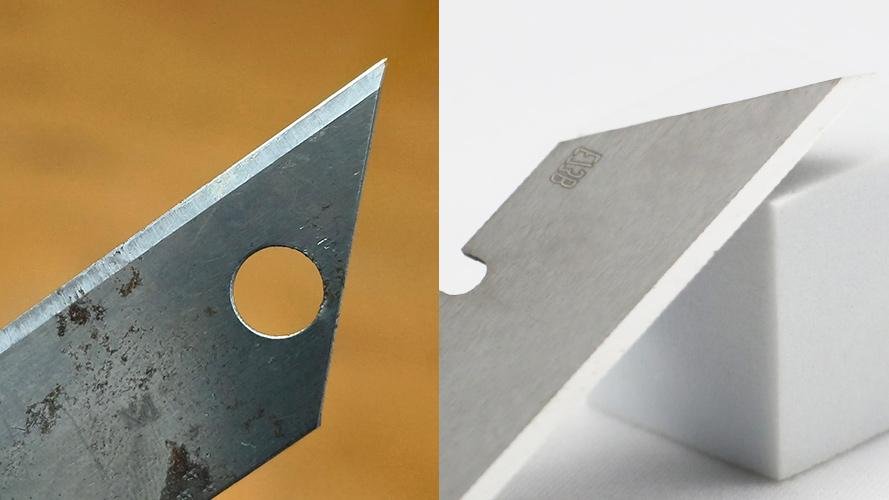
A blade's hardness value is the foundation of its performance. It tells us how well the heat treatment process4 worked and if the material is consistent. Think of it as a guarantee of strength. If the hardness is too low, the blade will dull quickly. If it's too high, it might become brittle and chip under pressure. The goal is to find the perfect balance for your specific application.
For example, a client in Germany in the plastic film industry faced constant line stoppages. Their blades were wearing out incredibly fast. I asked them to check the Rockwell C (HRC) values. It turned out their blades were 2-3 HRC points below the necessary spec. We supplied them with our blades, which are strictly controlled to HRC 62. This simple change increased their blade life by 40% and drastically cut their downtime.
| Performance Metric | Low Hardness (HRC 59) | Optimal Hardness (HRC 62) |
|---|---|---|
| Wear Resistance | Poor | Excellent |
| Edge Retention | Low | High |
| Blade Lifespan | Short | Extended (+40%) |
| Downtime | Frequent | Minimal |
This shows how a small difference in hardness can have a huge impact on your bottom line. It's not just a number; it's a direct indicator of quality and reliability.
How Do You Choose The Right Rockwell Scale For Your Blade?
Confused by HRA, HRB, and HRC scales? Using the wrong one can give you misleading results. Choosing the correct scale is essential for accurate and meaningful hardness testing.
Choose the scale based on the blade's material. Use the HRC scale (diamond indenter, 150 kgf load) for hardened steels. Use the HRA scale (diamond indenter, 60 kgf load) for very hard materials like cemented carbide. The HRB scale (ball indenter) is for softer materials.
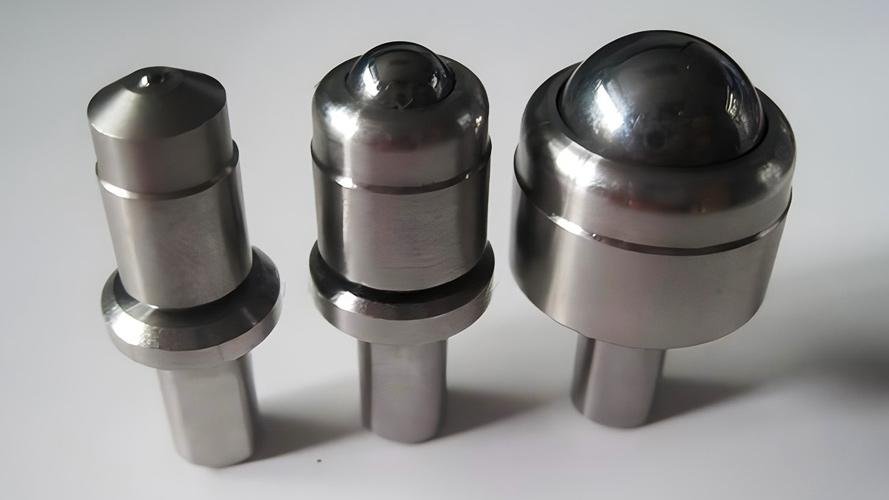
Selecting the right scale is not just a technical detail; it's fundamental to getting data you can trust. The scale determines the type of indenter and the amount of force (load) used. This must be appropriate for the material you are testing. Using a load that's too heavy on a brittle material could fracture it. A load that's too light on a hard material won't leave a measurable indent.
I once cooperated with a textile company in Brazil cutting tough synthetic fabrics. They were using carbide blades but were new to in-house quality control. I explained that for extremely hard materials like tungsten carbide, the HRA scale is the industry standard. It uses a lighter major load than HRC, preventing potential micro-cracks. By adopting the HRA scale, they established a reliable QC process. This ensured every blade they received met the precise hardness needed for their demanding application.
Key Rockwell Scales For Blades
| Scale | Indenter | Major Load | Typical Blade Application |
|---|---|---|---|
| HRC | Diamond Cone | 150 kgf | Hardened Steel, HSS, PM Steel |
| HRA | Diamond Cone | 60 kgf | Tungsten Carbide |
| HRB | 1/16" Ball | 100 kgf | Softer Steel bodies, non-ferrous metals |
This simple choice helped them avoid costly failures and maintain production quality.
What Are Common Mistakes To Avoid During Testing?
Getting inconsistent hardness readings? The problem might be your testing procedure, not the blade itself. Small mistakes can lead to big errors that affect your quality control decisions.
Avoid testing too close to the edge, as this can give false readings. Ensure the blade surface is clean, flat, and free of scale. The blade must be held perpendicular to the indenter to prevent slipping. These simple steps ensure accurate and repeatable results.
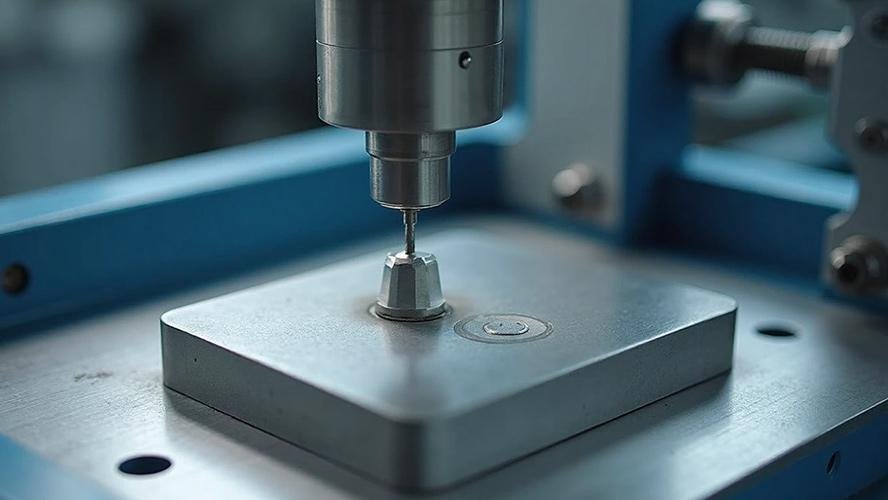
Accuracy in Rockwell testing comes from careful preparation and procedure. Even the best equipment will give you bad data if the setup is wrong. The most common errors are surprisingly simple to fix once you know what to look for. The location of the test point, the condition of the surface, and the alignment of the blade are all critical.
I remember a case with a paper converting client in India. They were frustrated with wildly inconsistent hardness readings from the same batch of blades. After a few questions, I suspected the issue was their testing location. Their operators were placing the indenter very close to the sharp cutting edge. This "edge effect" causes the material to deform differently, skewing the result. I advised them to always test at least 2.5 times the indentation diameter away from any edge. They implemented this small change, and their readings immediately became stable and reliable.
Checklist For Accurate Testing
| Check Point | Correct Procedure | Why It Matters |
|---|---|---|
| Location | Min. 2.5x indent diameter from edge | Prevents edge deformation errors. |
| Surface | Clean, flat, no decarburization | Ensures the test measures the base material. |
| Alignment | Blade perpendicular to indenter | Avoids indenter slip and inaccurate depth. |
| Support | Blade is stable and does not move | Prevents movement during load application. |
Following these guidelines turns the Rockwell test from a potential source of confusion into a powerful quality control tool.
How Do Material And Heat Treatment Affect Rockwell Hardness?
Ever wonder why two blades made from the "same" steel perform differently? The secret lies in the heat treatment, which is revealed by hardness testing.
A industrial blade's material sets its potential hardness, but heat treatment unlocks it. Processes like quenching and tempering create the desired microstructure5. Rockwell testing verifies that this treatment was successful and consistent, ensuring the blade will perform as expected during cutting operations.
You can't have a high-performance blade without excellent material and a precise heat treatment process. Heat treatment transforms the internal structure of the steel, creating properties like hardness and wear resistance. The Rockwell test is our window into that internal structure. It confirms whether the process achieved the target hardness uniformly. Inconsistent hardness is a red flag for a flawed heat treatment cycle.
A food processing plant in Mexico taught me a valuable lesson about this. They used stainless steel blades to slice frozen products, but some blades were chipping, posing a contamination risk. We analyzed their failed blades and found inconsistent HRC values6. This pointed to a poor heat treatment process from their previous supplier. We supplied them with our blades made from steel that undergoes a specialized cryogenic treatment7. This process ensures a uniform structure and a consistent HRC value. The chipping problem disappeared, enhancing their productivity and food safety.
Heat Treatment & Hardness
| Stage | Process | Impact on Hardness |
|---|---|---|
| Annealing | Heating and slow cooling | Softens steel for machining. |
| Hardening | Heating and rapid quenching | Maximizes hardness, but makes it brittle. |
| Tempering | Reheating to a lower temp | Reduces brittleness, retains high hardness. |
| Cryogenics | Deep freezing after quenching | Refines grain structure for ultimate hardness and durability. |
This shows that hardness is the final proof of a well-executed manufacturing process, from raw material selection to the final tempering step.
Conclusion
Mastering the Rockwell Hardness Test is key to blade quality. It ensures consistency, predicts performance, and boosts your operational efficiency. It's a simple, powerful tool for success.
Learn how blade performance is directly influenced by hardness testing, ensuring optimal cutting efficiency. ↩
Discover the key factors that influence wear resistance, crucial for extending blade life and reducing costs. ↩
Understanding toughness can help you select the right materials for your blades, enhancing their performance. ↩
Gain insights into the heat treatment process that affects blade hardness and overall performance. ↩
Understanding microstructure can help you optimize the heat treatment process for better blade performance. ↩
Explore the significance of HRC values in determining the quality and durability of blades. ↩
Discover how cryogenic treatment enhances the hardness and durability of industrial blades. ↩