Skip to content
Tobacco Blade
Tobacco blades are one of the essential knives in the tobacco processing industry. For specific cutting needs, PASSION tobacco blades are characterized by their high hardness and density, and are perfectly adapted for use in both filament cutters, roll splicers and packaging machines.
The Tobacco Blade PASSION Offers You
Tobacco blades are engineered to deliver stable, precise cutting performance throughout continuous production. With controlled hardness, durable edges, and strong wear resistance, they ensure clean slicing and uniform shred formation across various processing machines, supporting consistent product quality in every stage of manufacturing.

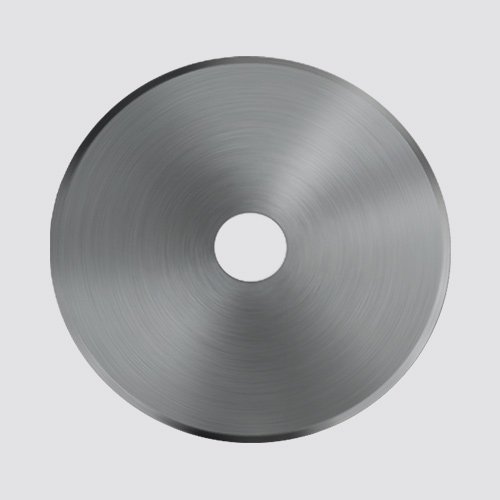
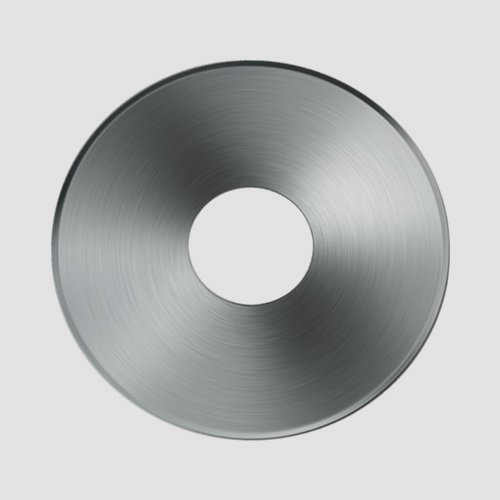
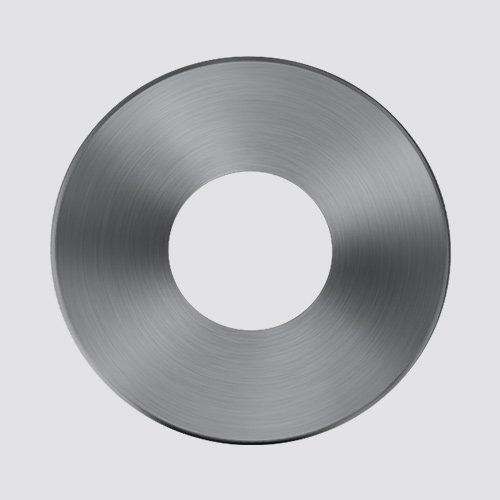
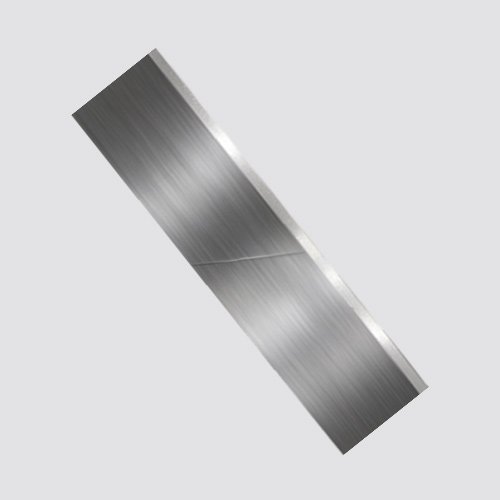
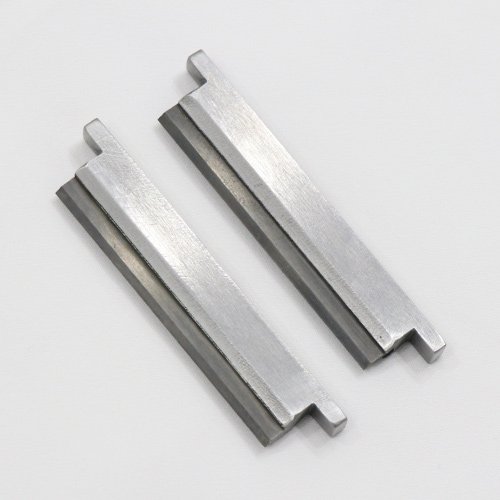
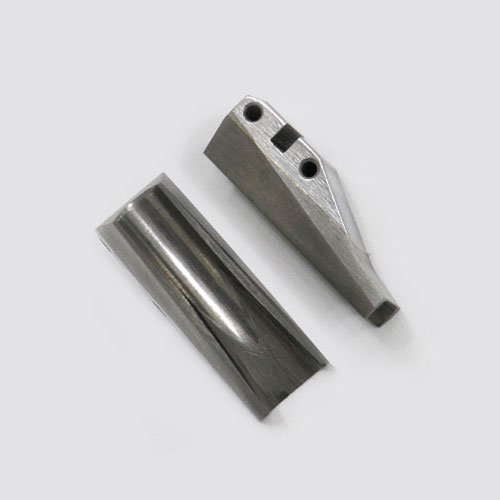
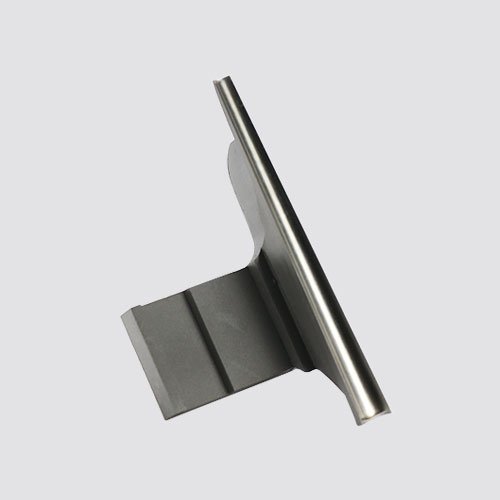
Some Tobacco Blades on Display
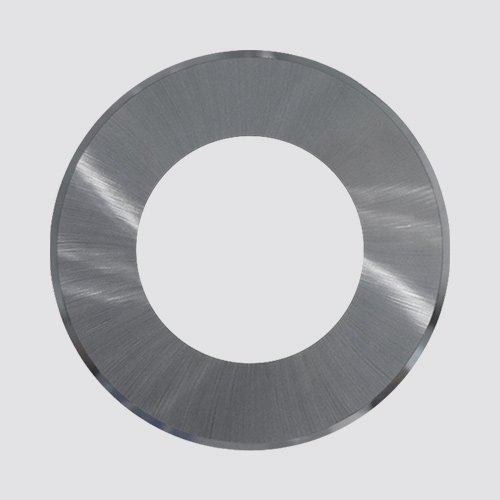
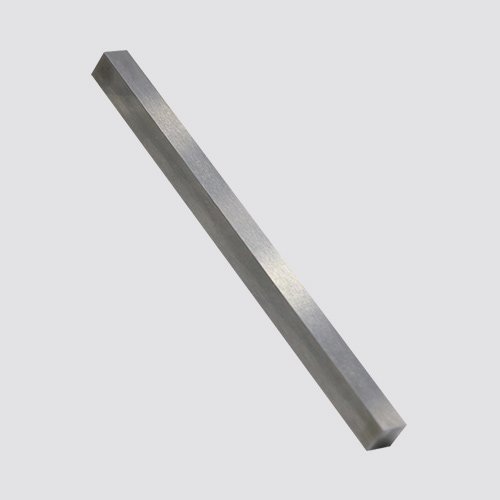
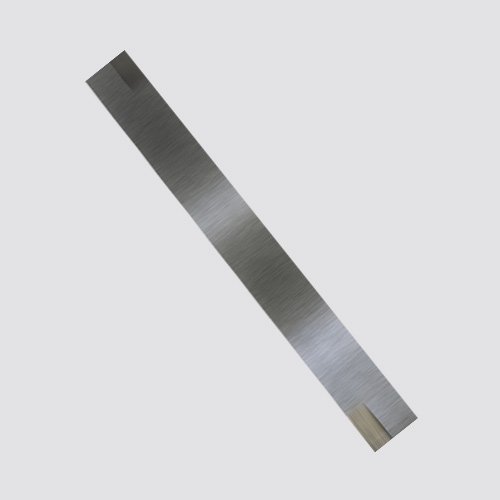
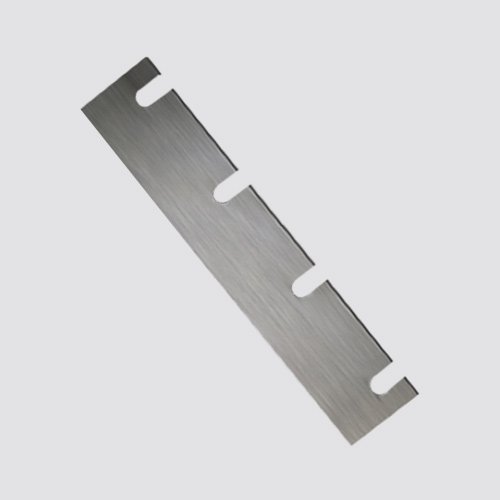
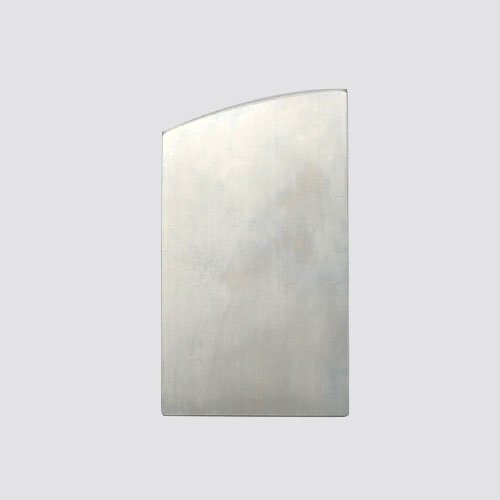
Our production includes blades used in cutting tobacco leaf, reconstituted sheet, filter rods, and tipping paper, covering both domestic and international machine brands. Whether you require precision circular blades, thin blades, or square blades, we are fully equipped to deliver consistent quality and long-lasting performance. Below are examples of some tobacco blades we have manufactured for various production lines in recent years.
Compatible Tobacco Cutting Machine Brand
PASSION manufactures tobacco cutting knives for world-renowned tobacco processing machinery manufacturers such as Hauni, Garbuio, G.D, Molins, Comas, ITM and Körber. Simply provide the machine brand and model specifications, and our team will promptly quote you. We can also tailor cutting solutions based on your drawings.















Let's Talk About Your Cutting Needs
If you don’t know the blade’s detailed specifications (dimensions, cutting edge geometry, drawings, etc.), please share your cutting requirements with us. We will thoroughly understand your specific application, materials, equipment, and production goals to recommend (or design) the most suitable tobacco industry blades for you.
Core Functions of Various Types of Tobacco Blade
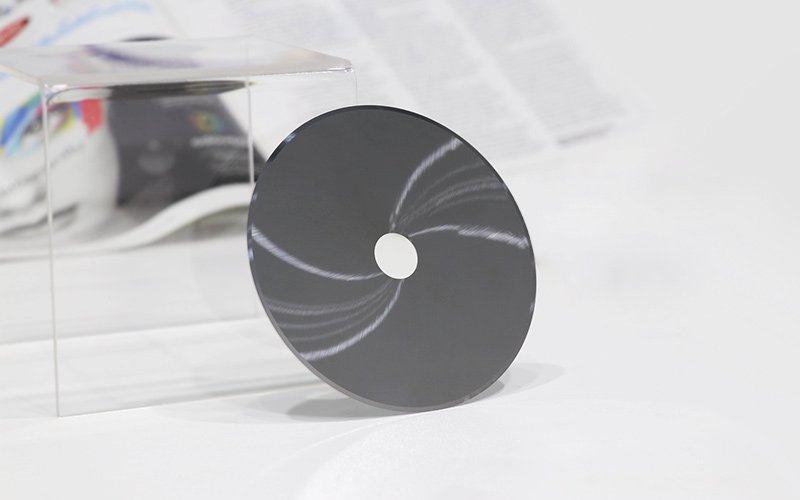
Circular Blades
Description
- Round, disc-shaped blades that rotate during the cutting process.
- Features a highly precise straight, knife-edge design, which is essential for delivering an exceptionally clean cut.
Characteristic Functions
- Specifically designed for the high-speed cutting of formed cigarette rods and filter rods.
- Provides smooth, precise cuts at high production speeds.
- Often made from tungsten carbide or high-speed steel for durability.
- Compatible with various tobacco machines like Hauni, GD, or Decoufle.
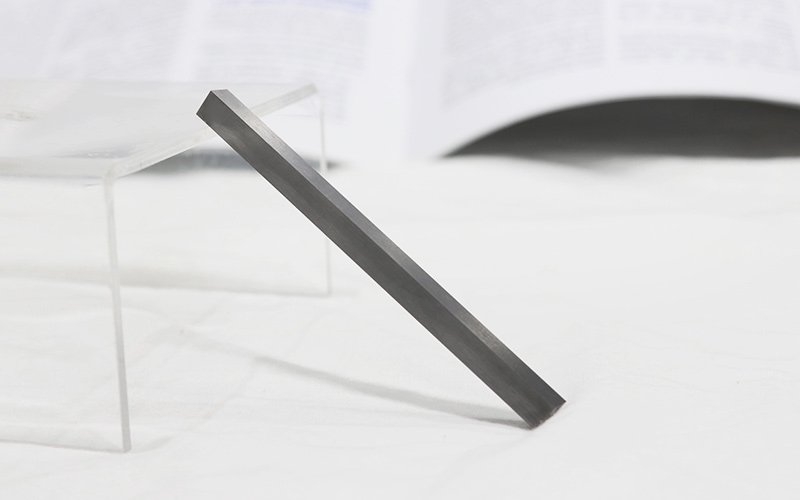
Cork Knives
Description
- Rectangular or square in shape with a straight or beveled edge.
- May include notches or mounting holes for machine compatibility.
Characteristic Functions
- Commonly used in chopping or guillotine-type cutting units.
- Ideal for block-cutting tobacco stems, plugs, or compressed material.
- Offers stable cutting force and resistance to breakage.
- Available in various edge profiles, such as single-bevel or double-bevel.
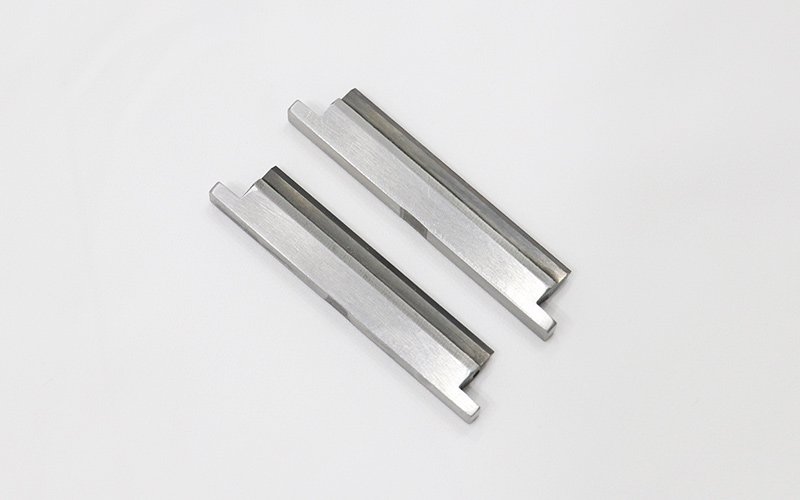
Mark Knives
Description
- Small, fine-edged blades specially designed for cutting tipping paper (the paper that joins the filter to the cigarette).
- Highly precise with minimal blade runout or deviation.
Characteristic Functions
- Designed for cutting tipping paper that wraps around the filter and cigarette.
- Ensures clean, accurate cuts without fraying or tearing the paper.
- Crucial for maintaining visual quality and brand presentation of cigarettes.
- Made from ultra-hard, precision-ground materials for extended life.
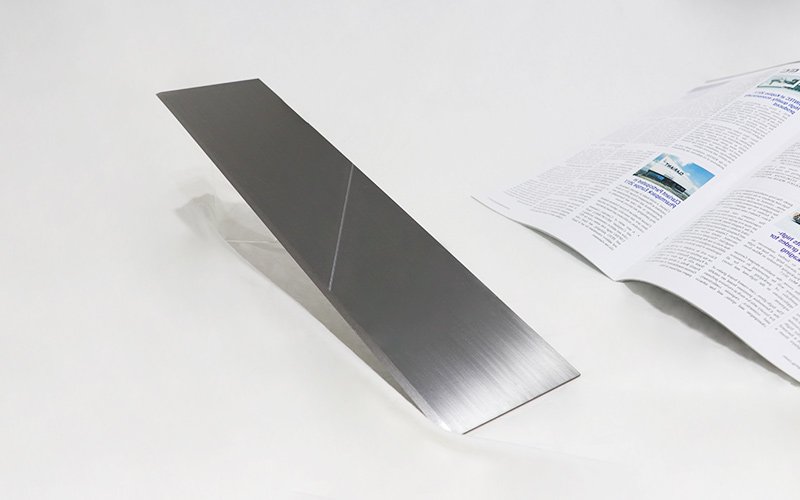
Rotary Knives
Description
- Ultra-thin and extremely sharp straight blades.
- Edge profiles vary: single-bevel, double-bevel, or micro-serrated for specific applications.
- Often coated (e.g., TiN, TiAlN, ceramic) to extend service life, enhance wear resistance, and prevent corrosion.
Characteristic Functions
- Used for cutting reconstituted tobacco sheets or fine slicing of natural leaf.
- Ensures minimal dust production and clean cut edges.
- Optimized for sharpness retention, reducing downtime due to blade changes.
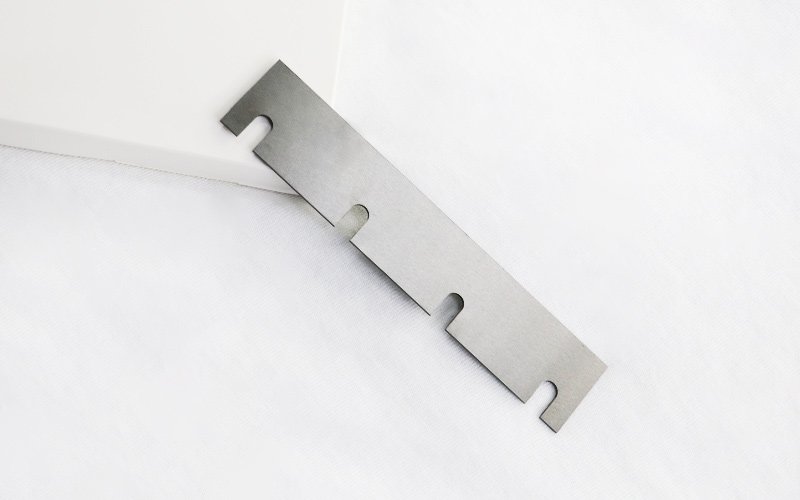
Tipping Blades
Description
- Straight blades with precision-machined notches for specific cigarette machines.
- Mounted on drums for the precise cutting of tipping paper.
- Made from hard materials like tungsten carbide for sharpness and long working life.
Characteristic Functions
- Specifically used for cutting tipping paper (the paper that joins the filter to the cigarette).
- Ensures a clean, accurate cut on tipping paper, crucial for final appearance and quality.
- For high-speed production, ensuring consistent performance and reduced downtime.
- Compatible with specific tobacco machines, like Hauni Protos.
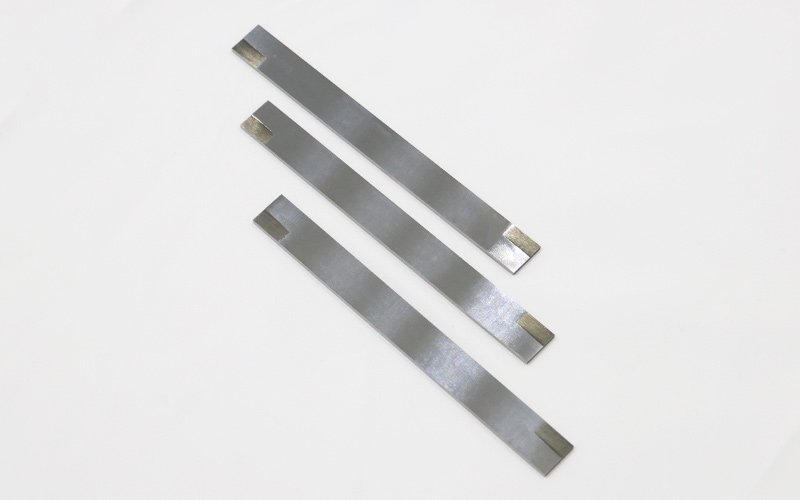
Shear Cut Knives
Description
- Straight, linear knives featuring a tungsten carbide tip brazed onto a tough steel body.
- Mounted in sets on high-speed rotating cutter heads.
- Straight knives with a steel body for resilience and a hard carbide tip for wear resistance.
Characteristic Functions
- Cuts compressed tobacco into shreds via high-speed shearing against a ledger blade.
- Knife precision and sharpness determine cut width and tobacco quality.
- Engineered for extreme durability to withstand the abrasive nature of tobacco and maintain a sharp edge for extended production runs.
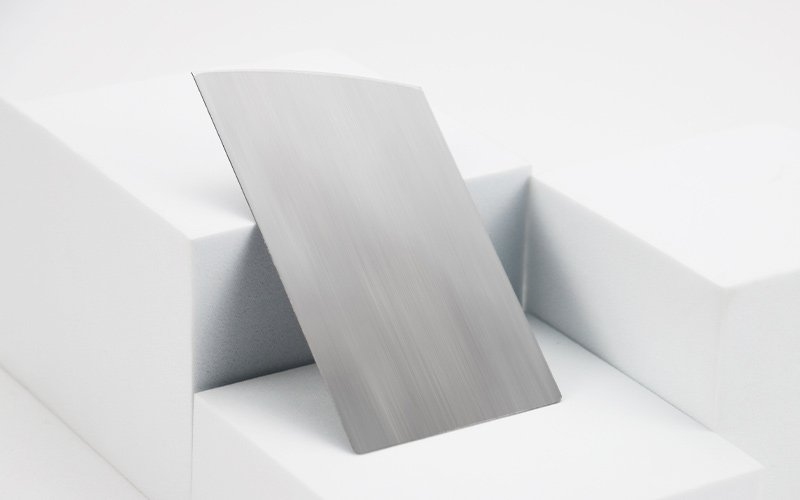
Cut Off Knives
Description
- A thin, curved, precision blade made from high-speed steel or solid tungsten carbide.
- Mounted on a high-speed rotating cutter head inside a cigarette maker machine.
- Engineered to cleanly sever the continuous cigarette rod into individual cigarettes.
Characteristic Functions
- Performs the final cut, separating the rod into individual cigarettes and filters.
- Ensures a clean, perpendicular cut to prevent tobacco loss and ensure high quality.
- Operates at high speeds, requiring balance, hardness, and excellent wear resistance.
- Blade condition directly impacts cigarette appearance and minimizes production waste.
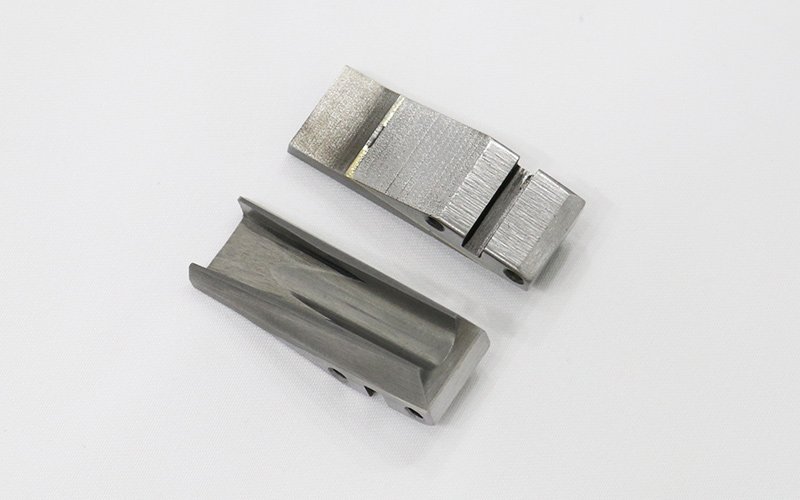
Tobacco Shoes
Description
- A matched top and bottom set of precision-machined steel or carbide components.
- Used in the garniture section of cigarette makers like Hauni Protos, GD or ITM.
- Forms a U-shaped channel to pre-compress loose tobacco into a continuous rod.
Characteristic Functions
- Performs the initial compression of shredded tobacco as it enters the garniture.
- Guides the tobacco stream, ensuring a uniform flow into the wrapping process.
- The internal geometry defines the initial density and shape of the tobacco rod.
- High wear resistance is crucial to withstand the abrasive flow of tobacco shreds.
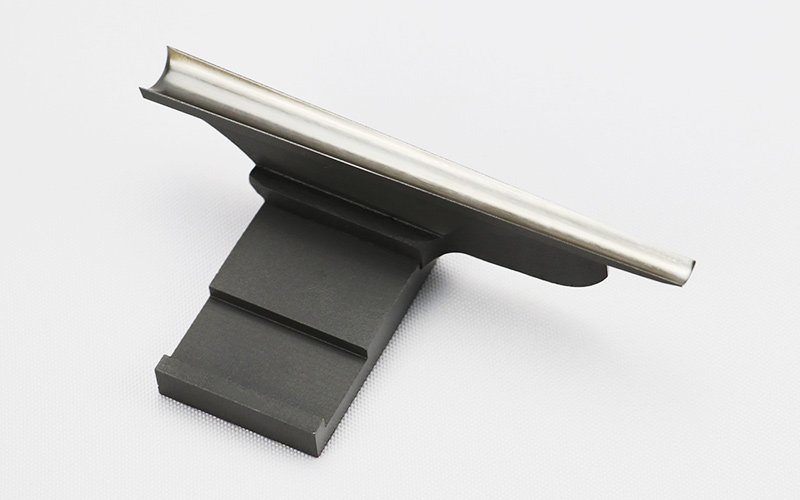
Tongue Piece
Description
- A precision assembly with a polished guide and a machined mounting base.
- A crucial wearable part in the garniture section of cigarette maker machines.
- Used on major models like Molins MK8/9, Hauni Protos, and GD series.
Characteristic Functions
- Forms the final rounded profile of the tobacco rod before it enters the paper.
- Polished surface reduces friction, ensuring a smooth, high-speed tobacco flow.
- Its precise geometry is critical for cigarette density, firmness, and appearance.
- Works with the garniture bed to create the final, continuous cigarette rod.
Common Problems & Solutions for Tobacco Blade
Tobacco blade performance directly impacts cutting quality and production efficiency. Below are common problems encountered in tobacco blade use, along with their causes and recommended troubleshooting solutions.
- Causes
- Hard tobacco stems and other foreign materials cause rapid edge wear and can lead to chipping or fracturing of the blade.
- Inferior blade material or poor manufacturing precision results in low durability and inconsistent cutting performance.
- uring high-speed cutting, excessive frictional heat can anneal the blade edge, causing it to soften and lose sharpness rapidly. This also increases resin adhesion.
- Solution
- Regularly check blade wear and replace worn or damaged blades promptly.
- Choose blades made from superior materials (e.g., tungsten carbide) for enhanced wear resistance and toughness against fractures.
- Use methods like compressed air to dissipate frictional heat. This prevents blade softening, reduces resin buildup (adhesion), and improves overall cutting efficiency.
- Causes
- A blade feeding mechanism failure prevents proper sharpening, creating a dull edge and causing poor cutting quality like tobacco fines, sticking, and uneven shred width.
- An incorrect blade feed rate (too fast or slow) disrupts the grinding process, producing a poorly sharpened edge that harms cutting quality and reduces blade lifespan.
- Adhesion of materials like tobacco resin (scale) or other contaminants on the blade surface increases cutting resistance, causing the cutting edge to dull prematurely.
- Solution
- Access the cutting head to visually inspect the blade feeding mechanism and confirm each blade is advancing correctly during the sharpening cycle.
- Calibrate the blade feed rate according to the machine's specifications to ensure a consistent and stable advance for proper sharpening.
- Remove foreign matter before cutting and control tobacco moisture (12%-14%) to reduce resin buildup. Regularly clean blades and the cutting area to prevent the accumulation of sticky adherents.
- Causes
- An improperly seated blade or incorrect clearance between the blade and the mouthpiece (ledger blade) will cause inconsistent shredding and increased tobacco fines.
- A misaligned blade or holder angle causes the cut to be non-perpendicular to the tobacco cake’s feed direction, resulting in angled shreds and inconsistent quality.
- Solution
- Reinstall the blade to ensure that it is in place and secure.
- Adjust the clearance between the blade and the mouthpiece to meet the precise specifications required for the desired cut.
- Adjust the blade and blade holder angles to ensure the cutting path is perfectly perpendicular to the feed direction of the tobacco cake, guaranteeing a straight, even cut.
- Causes
- Using an improper grinding wheel, such as one with a grit size that is too coarse, produces a rough cutting edge that is not sufficiently sharp.
- The grinding wheel does not feed or its feed rate is too low, preventing effective contact and failing to sharpen the blade.
- Excessive grinding wheel vibration, often from imbalance or worn bearings, results in an unevenly ground and inconsistent cutting edge.
- Solution
- Select and install a grinding wheel with the appropriate grit size as specified for the machine to ensure a fine, sharp edge.
- Check and adjust the grinding wheel's feed mechanism to ensure it advances correctly and effectively sharpens the blade.
- Inspect the wheel for imbalance and the spindle for wear. Balance, dress, or replace the wheel and service bearings as needed to eliminate vibration.
- Causes
- The travel or position of the compressor horn is not adjusted properly, resulting in an angled or uneven cut.
- The feed compression chain runs abnormally (e.g., slipping, jerking, or poor tracking), which leads to inconsistent density in the tobacco cake. This negatively affects the uniformity of the cut tobacco.
- Solution
- Adjust the travel and installation position of the compressor horn according to technical specifications to ensure a straight and level cut.
- Inspect the operation of the feed compression chain, clean away any accumulated resin and debris, and adjust its tension to ensure stable performance.
How To Improve Tobacco Blade Efficiency ?
Through the synergy of equipment maintenance, operation optimization, blade management, environmental control and technology upgrading, the efficiency of tobacco blades can be significantly improved. Below are the specific implementation methods and effects:
Optimize Equipment Maintenance
Regular Blade Sharpening: Establish a standardized sharpening process and use high-precision grinding wheels to sharpen the blades regularly to ensure blade sharpness. This reduces cutting resistance, lowers energy consumption, and improves cutting quality (e.g., reduces the rate of tobacco fines).
Cleaning The Cutting System: Clean the blades, guide rails and feed ports after daily shutdown to prevent the accumulation of tobacco scale or foreign matter. Avoid the loss of cutting efficiency caused by adhesions and extend blade life.
Calibrate Equipment Precision: Regularly check the blade installation angle, feed speed and other parameters to ensure stable equipment operation. Reduce poor cutting (such as uneven cut) caused by equipment deviation.
Improve The Operation Process And Parameters
Adjust Cutting Parameters: Adjust blade speed, feed speed and cutting pressure according to the type of tobacco (e.g. leaf thickness, moisture content). For example, for tobacco with high moisture content, feed speed can be reduced to avoid sticking.
Standardized Operation Training: Regularly train operators on skills, including equipment debugging and abnormal handling. Reduce equipment failures caused by human error and improve overall efficiency.
Reduce Idle Running: Optimize the production plan to avoid long time idle running when there is no material. Reduce energy consumption, reduce unnecessary wear and tear of blades.
Scientific Management Of Blades
Choose High-Quality Blades: Select high hardness, wear-resistant blade materials (such as high-speed steel, carbide) according to the cutting needs. Extend the service life of blades and reduce the frequency of replacement.
Establish Blade File: Record the use time, cutting volume and maintenance of each blade to predict the replacement cycle. Avoid efficiency loss or quality accidents caused by overuse of blades.
Reasonable Storage Of Blades: keep the blade storage environment dry, rust-proof, avoid collision or deformation. Ensure that spare blades are available at all times to reduce downtime waiting time.
Control The Production Environment
Adjust The Temperature And Humidity: Control the temperature of the workshop at 20~25°C and the humidity at 60~70%. This helps maintain the pliability of the tobacco leaf, reduces the generation of fines during cutting, and ensures stable cutting conditions.
Optimize Material Treatment: Pre-treat tobacco before cutting (such as removing impurities and adjusting humidity) to avoid fluctuations in cutting load caused by material differences.
Introducing Technological Upgrades
Adopt Automated Detection: Install sensors to monitor blade wear, cutting force, and other parameters in real time, and automatically provide warnings for replacement. This realizes preventive maintenance and reduces unplanned downtime.
Upgrade Blade Material: Explore new coating technologies (e.g., TiN, TiAlN) or composite blades to further improve blade wear and corrosion resistance.
The Key Factors Affecting Tobacco Blade Quality
The manufacturing quality of tobacco blades directly determines their cutting performance, service life, and operational reliability. Several core factors influence the quality of these blades, including material selection, machining precision, edge geometry, heat treatment, and surface coating.
No.1
Material Selection – Determines Performance Limits
Tungsten Carbide
Advantages: Extremely high hardness (HRA 89–93), exceptional wear resistance, excellent for high-speed, high-temperature cutting environments.
Applicable Cutter Types: Cigarette cutting blades, circular blades for tobacco, filter rod cutters.
Challenges: High brittleness of the material, requires precision machining with specialized equipment.
Ceramic (Zirconia, Alumina)
Advantages: Higher hardness than carbide, corrosion-resistant, non-conductive, ideal for sticky or high-moisture tobacco environments.
Application Scenarios: for cutting in high temperature and humid environments, especially suitable for processes that are prone to sticking to tobacco or glue.
Challenges: Extremely brittle, extremely demanding on processing techniques, high processing costs.
High Speed Steel (HSS)
Advantages: Easy to machine, affordable, good toughness.
Applicable Scenarios: Medium-speed cutting or where cost-effectiveness is a priority.
Challenges: Lower wear resistance than carbide, suitable for mid-range market.
Stainless Steel/Tool Steel (For Plating Treatment)
Suitable for blades with special shapes such as flower blades, wave blades or blades that require post-treatment coating.
No.2
Machining Precision – Ensures Operational Stability And Cutting Accuracy
Critical Dimensional Tolerance
Parameter | Requirement | Impact |
Thickness Tolerance | ±0.005mm to ±0.01mm | Ensures Consistent Cutting Depth |
Flatness | ≤0.01mm | Guarantees Tight Fit To Machine Base |
Runout / Concentricity | ≤0.01mm (For Circular Blades) | Ensures Stability At High Rpm |
Surface Roughness | Ra 0.1–0.2μm | Reduces Friction And Improves Finish |
Required Equipment
CNC Precision Grinding Machine: for ensuring that the edge of the blade is consistent with the overall size.
Laser Punching/Cutting Equipment: for high-precision punching and contour shaping.
CMM: for final inspection of dimensional accuracy and geometric error.
No.3
Cutting Edge Geometry – Defines Cutting Quality And Tool Life
The sharpness and angle of the cutting edge have a direct impact on the quality of the cut, the speed of blade wear and the neatness of the tobacco appearance.
Typical Edge Designs
Edge Type | Angle Range | Application |
Single Bevel (Flat) | 20°–25° | Standard Cigarette Or Tobacco Cutting |
Double Bevel (V-Shaped) | 30°–40° | High-Speed Or Multilayer Applications |
Micro-Toothed / Wavy | Custom Geometry | Filter Rods, Papers, Anti-Slip Cutting |
Additional Considerations
Whether to polish the edge to reduce friction.
Whether to apply anti-stick treatment for sticky tobacco environments.
Whether to optimize micro-edge finish to reduce thermal deformation.
No.4
Sintering For Non – Metallic And Cermet Materials
Tungsten Carbide
Heat Treatment Process: High-temperature sintering (1400–1600 °C) in a vacuum or inert gas atmosphere to densify and bond the carbide particles with a metallic binder (e.g., Cobalt).
Key Point: Careful control of the sintering profile and binder content is crucial to balance extreme hardness with sufficient toughness while minimizing porosity.
Ceramic (Zirconia, Alumina)
Heat Treatment Process: High-temperature sintering (1400–1600 °C) to densify the ceramic powder. This process does not involve quenching like traditional steel heat treatment.
Key Point: Achieving full densification and phase stabilization is critical for maximizing hardness and improving fracture toughness.
High Speed Steel (HSS)
Heat Treatment Process: Involves preheating, austenitizing (~1150–1250 °C), rapid quenching, and multiple tempering cycles.
Key Point: High-temperature austenitizing dissolves carbides, while multiple tempering cycles refine the microstructure and relieve stress, achieving an optimal balance of cutting performance and durability.
Tool Steel & Stainless Steel
Martensitic Grades (e.g., 420, 440C): Process varies by grade. Martensitic types (e.g., 440C) are quenched and tempered for hardness. Precipitation-hardening types (e.g., 17-4PH) are solution annealed and aged for strength and toughness.
Key Point: Tailored heat treatment processes are designed to develop the specific required hardness, toughness, and corrosion resistance for each grade, creating a stable and durable substrate for use with or without coatings.
Tool Steel (For Plating Treatment)
Heat Treatment Process: Martensitic grades (e.g., 420, 440) are austenitized at approximately 950–1100 °C, then oil- or air-quenched to form martensite, followed by tempering at 150–500 °C to adjust hardness and reduce brittleness. Austenitic grades (e.g., 304, 316) undergo solution annealing at around 1050–1150 °C with rapid cooling to restore ductility and remove carbide precipitates, remaining non-magnetic and ductile without quench hardening. Precipitation-hardening grades (e.g., 17-4PH) receive a solution treatment to dissolve alloying elements, then are aged at 480–620 °C to form strengthening precipitates.
Key Point: Tailored heat treatment preserves corrosion resistance while delivering the right hardness and toughness for each stainless steel type.
No.5
Surface Coating (Optional) – Enhances Surface Performance
Coating Type | Features | Application Scenarios |
Tin | Hard, Oxidation-Resistant | General Tobacco Blades |
Tialn | High Thermal Resistance | High-Speed, Dry Cutting Environments |
Dlc | Diamond-Like Carbon, Low Friction | For Sticky Materials Or Fine Tobacco |
Crn | Excellent Corrosion Resistance | For Wet Tobacco Or Flavored Cigarettes |