Skip to content
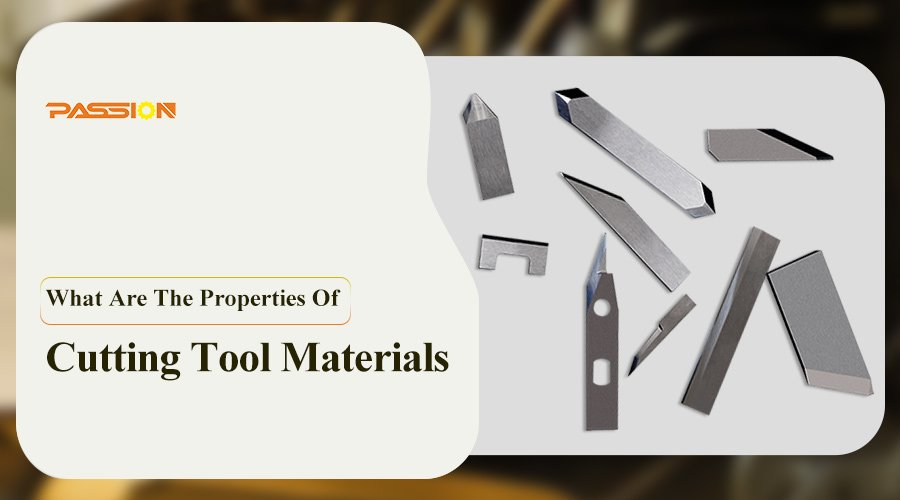
Cutting tool materials are critical in industries that involve precision cutting, such as manufacturing, machining, and woodworking. The efficiency, accuracy, and longevity of a tool depend heavily on its material properties. In this guide, we’ll explore the various properties of cutting tool materials and why choosing the right material is essential for optimizing industrial processes.
Understanding these properties allows businesses to select tools that enhance productivity, minimize downtime, and improve product quality. Whether you are cutting metal, plastic, or composite materials, the right cutting tool material can make a big difference in how well your process works.
Key Properties Of Cutting Tool Materials
When choosing cutting tools, it’s important to think about the properties that will directly affect how well they work. Cutting tool materials have to be hard, tough, and wear resistant to last and work well. In high-precision and high-speed applications, these properties are even more important.
Here are the key properties every cutting tool material should have:
1. Hardness: The Foundation Of Cutting Tool Performance
Hardness is a fundamental property that directly affects a cutting tool’s ability to resist wear. In simple terms, hardness is a material’s resistance to deformation, which allows cutting tools to stay sharp for longer. Hardness is especially important when cutting harder materials like metals because it determines how well the tool can get in and take material out without wearing down quickly.
Hardness in cutting tools is measured using a few different scales, like the Rockwell scale (HRC), Vickers hardness test (HV), or Brinell hardness test (HB). Carbide tools, for example, are known for their high hardness, which allows them to cut through tough metals at high speeds. However, hardness has to be balanced with other properties like toughness to make sure the tool doesn’t get brittle and break under stress.
2. Toughness: Resisting Fracture And Breakage
While hardness is important for keeping a sharp edge, toughness is what keeps a tool from breaking. Toughness is a material’s ability to absorb energy without breaking. When you’re cutting, especially in metalworking or machining, your tools get hit with a lot of force and impact. If a tool isn’t tough enough, even the hardest tools can chip or break.
Toughness is especially important for tools used in interrupted cutting operations, like milling, where the tool is constantly going in and out of the workpiece. In those cases, the tool has to be able to take the repeated impact forces without cracking or chipping.
For example, high-speed steel (HSS) is known for being really tough, which makes it great for cutting tools that get hit with high shock loads, like drills and taps. Carbide, on the other hand, is harder but less tough, which means it’s more likely to chip or break if you use it wrong.
3. Wear Resistance: Extending Tool Life
Wear resistance is a material’s ability to stand up to abrasion and keep its integrity over time. Cutting tools are always getting worn down as they cut through stuff, especially when they’re cutting through abrasive workpieces or cutting at high speeds. A material with high wear resistance will stay sharp and keep cutting well for a long time, which means you don’t have to replace your tools as often.
You can make a tool more wear resistant by treating or coating its surface. For example, you can coat carbide tools with titanium nitride (TiN) or some other fancy coating to make them more resistant to abrasion and last longer. Ceramics and diamond tools are also famous for being really wear resistant, which makes them great for cutting stuff for a long time when it’s really tough.
4. Hot Hardness: Maintaining Performance At High Temperatures
Hot hardness, or red hardness, is a material’s ability to keep being hard even when it’s hot. When you’re cutting stuff really fast, the tool gets hot because of the friction between the tool and the workpiece. A cutting tool material with good hot hardness will keep working even when it gets really hot, so it doesn’t get all bent out of shape or lose its sharpness.
Materials like carbide, ceramics, and cubic boron nitride (CBN) have really good hot hardness. That’s why you can use them for high-speed stuff when other materials like HSS would get soft. When you’re cutting metals like stainless steel or titanium, which get really hot when you cut them, hot hardness is a big deal because you want your tool to keep working and stay sharp.
5. Chemical Stability: Preventing Reactions With The Workpiece
Chemical stability is a big deal because you don’t want your cutting tool to react with the stuff you’re cutting or with the air around you, especially when things get hot. If your tool material reacts with stuff, it might wear out faster or get all rusty, which means it won’t work as well and it won’t last as long.
For example, ceramic and diamond tools are really chemically stable, which means you can use them to cut stuff that’s really aggressive chemically or in places where you might have a problem with things getting all rusty. If your cutting tool isn’t chemically stable, it might get all rusty or fall apart when you use it on certain things, and that means it won’t last as long and it won’t cut as well.
6. Shock Resistance: Handling Sudden Forces
In a lot of machining, especially when you’re roughing or cutting something that’s all jacked up, the tool gets hit with all kinds of loads and forces. Shock resistance is a tool’s ability to take those big hits without cracking or breaking.
High-speed steel (HSS) and some carbide grades are good at taking a hit, which is why you use them when you’re cutting something that’s always hitting the tool. You also need shock resistance when you’re cutting metal because the tool gets hit when you’re cutting.
Common Materials Used In Cutting Tools
There are a bunch of different materials you can use to make cutting tools, and each one has its own special stuff that makes it good for different things. Let’s take a closer look at some of the most common materials and what they’re good for.
1. High-Speed Steel (HSS)
High-speed steel (HSS) is a popular material for cutting tools because it’s tough, it wears well, and it stays hard even when it gets hot. That’s why you can use HSS for high-speed cutting.
Advantages of HSS:
It’s tough and can take a hit.
You can use it for lots of different stuff, like drills, taps, and reamers.
It’s cheaper than carbide and ceramic.
Limitations of HSS:
It’s not as hard as carbide, so it wears out faster when you’re cutting fast.
You can’t use it to cut really hard stuff or for super-precise stuff.
2. Carbide
Carbide is one of the hardest materials you can use for cutting tools, and it wears really well and stays hard even when it gets hot. That’s why you use carbide when you’re cutting stuff really fast and really precise.
Advantages of Carbide:
It’s really, really hard and wears really well, so your tool lasts longer.
It stays sharp and hard even when it gets really hot.
You can use it to cut stuff really fast and really precise, especially if it’s hard.
Limitations of Carbide:
It’s more brittle than HSS, so it can chip or break if you hit it really hard.
It costs more than HSS, but it lasts longer, so it’s worth it.
3. Ceramics
Ceramic cutting tools are really hard and wear really well, which makes them great for cutting stuff really fast. Ceramics don’t react with the stuff you’re cutting, even when they get really hot.
Advantages of Ceramics:
They’re really, really hard and wear really well, so your tool lasts longer.
They don’t react with the stuff you’re cutting.
You can use them to cut really hard stuff like cast iron and hardened steel.
Limitations of Ceramics:
They’re brittle and can break if you hit them really hard.
You can’t use them for everything.
4. Cubic Boron Nitride (CBN)
Cubic boron nitride (CBN) is one of the hardest cutting tool materials, second only to diamond. It has excellent wear resistance and thermal stability, which makes it great for machining hard materials like hardened steel.
Advantages of CBN:
It’s really hard and wears really well, so you can cut for a long time and be really precise.
It can cut really hard stuff without losing its edge.
It can take a lot of heat, so you can use it in high-temperature applications.
Limitations of CBN:
It’s expensive, so you only use it for special stuff.
It doesn’t work on soft stuff or metals that chemically interact with CBN.
5. Diamond
Diamond-tipped tools are the hardest and most wear-resistant cutting tool material. They’re used for precision cutting in industries like electronics, aerospace, and composites, where you need to machine non-ferrous materials and abrasives with precision.
Advantages of Diamond:
It’s really hard and wears really well, so you can cut for a long time and be really precise.
You can cut non-ferrous materials and abrasive materials like ceramics and composites.
It conducts heat really well, so it helps get rid of the heat when you’re cutting.
Limitations of Diamond:
It’s expensive, so you only use it for high-end stuff.
It reacts with ferrous metals, so it can wear and degrade chemically.
Advanced Technologies In Cutting Tool Materials
The development of new materials and technologies has led to the creation of advanced cutting tools that push the boundaries of performance. These technologies improve cutting speed, precision, and tool life, making them essential for industries that require high-performance tools.
Coatings: Enhancing Tool Performance
Modern cutting tools often have coatings that make them work better by making them harder, reducing friction, and making them last longer. Some of the common coatings are:
Titanium Nitride (TiN): Makes the tool last longer and work better by making it harder and reducing friction.
Titanium Aluminum Nitride (TiAlN): Works better at higher temperatures than TiN, so you can use it in hotter applications.
Diamond-Like Carbon (DLC): Is really hard and wears really well, so you can use it to cut really precisely in abrasive materials.
Hybrid Materials: Combining Properties For Optimal Performance
Hybrid materials combine the properties of different cutting tool materials to create tools that balance hardness, toughness, and wear resistance. These tools are designed for specific applications where traditional materials might not work as well. For example, ceramic matrix composites (CMCs) combine the toughness of ceramics with the heat resistance of composite materials, so you can use them in high-temperature applications.
Case Studies: The Impact Of Cutting Tool Materials In Industry
To understand what all this means in the real world, let’s look at a couple of case studies from industries where tool material selection is critical.
Case Study 1: Automotive Industry
In the automotive industry, they have to machine engine components, gears, and other critical parts really fast. They use carbide tools a lot for this because they can take the high temperatures and cutting speeds. By picking the right carbide grade and coating, they’ve been able to cut down on tool wear and make more parts faster, which means it costs them less to make stuff.
Case Study 2: Aerospace Industry
In the aerospace industry, they have to machine stuff really precisely, and the materials they use are really hard to cut. They use CBN and ceramic tools to machine things like titanium and heat-resistant alloys. By using these fancy cutting materials, they can hold tighter tolerances and not break their tools when they machine really fast. That means they don’t have to change tools as often, so they can make parts faster.
Comparing Cutting Tool Materials: Which Is Best For Your Application?
Picking the right cutting tool material means you have to know what you’re doing. Let’s compare the main materials we’ve talked about so you can figure out what’s best for you.
Property | High-Speed Steel (HSS) | Carbide | Ceramics | CBN | Diamond |
Hardness | Moderate | Very High | High | Very High | Extremely High |
Toughness | High | Moderate | Low | Low | Low |
Wear Resistance | Moderate | High | Very High | Very High | Extremely High |
Hot Hardness | Moderate | Very High | Very High | Very High | High |
Cost | Low | Moderate | Moderate | Moderate | Very High |
Applications | General-purpose cutting | High-speed machining | High-temperature cutting | Hard materials | Abrasive and non-ferrous materials |
How To Choose The Right Cutting Tool Material
Choosing the right cutting tool material requires a careful analysis of your specific cutting needs. Factors to consider include:
Material being cut: The hardness and abrasiveness of the workpiece material directly impact the tool material selection. For example, carbide tools are excellent for cutting metals, while diamond tools excel in cutting non-ferrous and abrasive materials.
Cutting speed: High-speed applications require tools with excellent hot hardness, such as carbide or ceramics, to prevent deformation and wear.
Budget constraints: While advanced materials like CBN and diamond offer superior performance, they are more expensive. HSS tools provide a more cost-effective solution for general-purpose applications.
Precision requirements: For applications requiring extreme precision, such as in the electronics or aerospace industries, diamond and CBN tools provide unmatched performance.
Wear Resistance And Tool Longevity
Wear resistance is one of the primary factors that determine how long a tool will last. In tough industrial environments, tools are constantly rubbing against stuff, getting hot, and being worn away by whatever they’re cutting. The longer a tool can resist wear, the more productive and cost-effective it is.
For example, carbide and CBN tools are known for being really good at resisting wear. That means they keep working for a long time. So, you don’t have to replace them as often, and you don’t have to stop working to sharpen them as much. On the other hand, tools that aren’t as good at resisting wear, like HSS tools, might have to be sharpened or replaced a lot, which costs more in the long run.
In conclusion, cutting tool materials are the backbone of efficient industrial cutting operations. Picking the right material means finding the right balance between hardness, toughness, wear resistance, and hot hardness, depending on what you’re doing. By understanding the properties of materials like HSS, carbide, ceramics, CBN, and diamond, you can pick the right tool to make your job go faster, cost less, and make a better part.
At PassionBlade, we specialize in providing high-quality, customizable industrial knives and cutting tools designed to meet the unique needs of our clients. Whether you’re looking for carbide blades, diamond tools, or specialized solutions for high-performance cutting, our team is ready to assist you in selecting the best tools for your application.
For more information on how our cutting tools can enhance your production processes, feel free to contact us at lesley@passiontool.com.