Skip to content
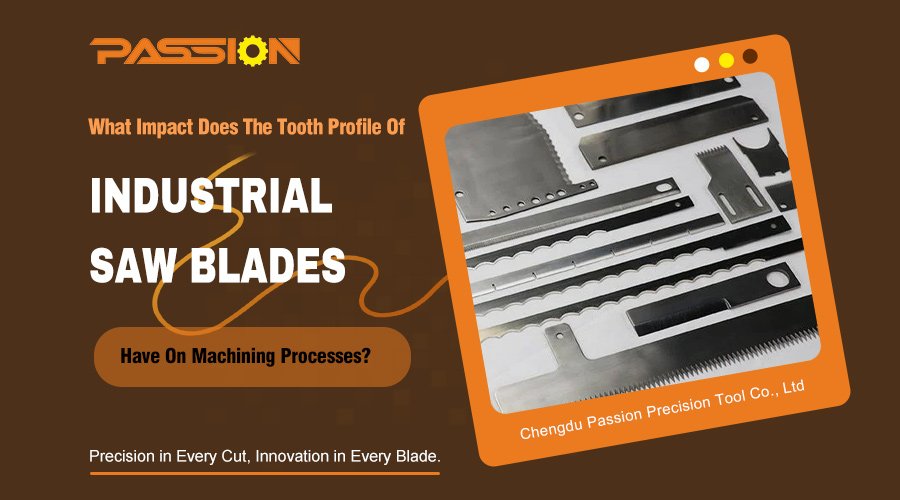
Are you frustrated by poor cutting quality and high material waste? This common problem often points back to your blades, costing you time and money. The solution is in the details.
The tooth profile of an industrial saw blade directly impacts cutting efficiency, finish quality, and blade lifespan. A correctly chosen profile ensures smooth material entry, effective chip removal1, and reduced cutting forces2. This optimizes the entire machining process for better performance and lower scrap rates.
I have helped many clients transform their operations simply by changing their blade's tooth profile. It is a small detail with a huge impact. But to make the right choice, you first need to understand the basics. Let's break down what goes into a blade's tooth design. This knowledge will empower you to select the best blades for your specific challenges and improve your results.
What Are The Fundamental Elements Of Tooth Profile Design?
Do you choose blades without understanding their basic design? This can lead to guesswork and inconsistent performance, wasting valuable materials. Learning the core design elements will help you select blades with confidence.
The most important elements are tooth height, pitch, rake angle, and tooth contour. These parameters work together to control how the blade penetrates material, distributes cutting force, and removes chips. Understanding them is the first step toward optimizing your cutting process.
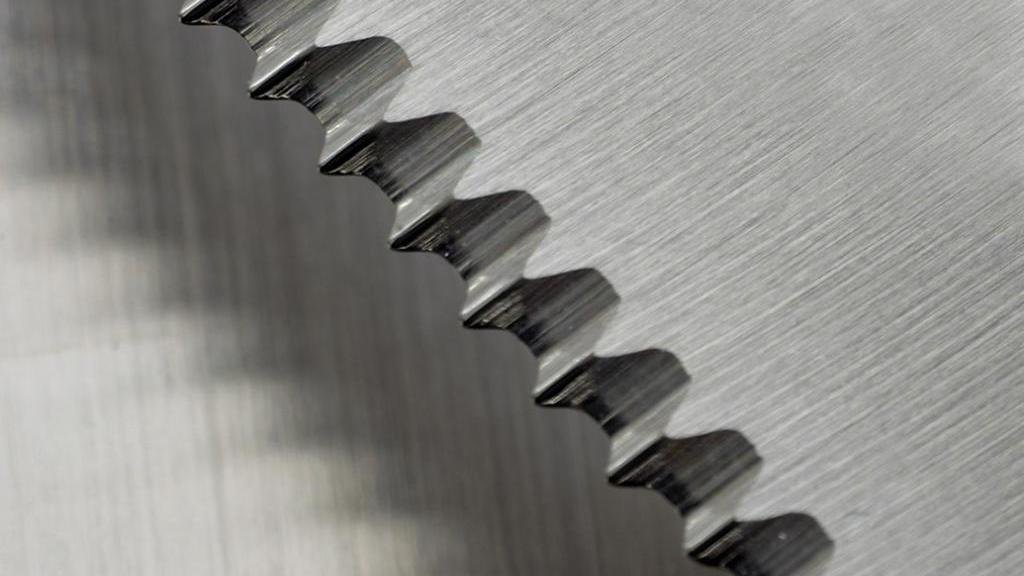
These elements are not just technical terms; they are the building blocks of an effective cutting tool. Each one plays a specific role, and the combination of these factors determines how the blade will perform in a real-world application.
Key Design Parameters
I once worked with a textile manufacturer in Vietnam who was struggling with frayed edges3 when cutting thick synthetic fabrics. Their blades had a low tooth height and a narrow pitch, causing the material to bunch up instead of cutting cleanly. After analyzing their process, I recommended a blade with a greater tooth height and a wider pitch. This allowed each tooth to make a single, definitive shear and provided more space for the cut fibers to clear away. The change was immediate. Their frayed edges disappeared, saving them a lot of material and rework time. This experience showed me how vital these fundamental elements are.
| Parameter | Function | Impact on Performance |
|---|---|---|
| Tooth Height | Determines the depth of cut per tooth. | Taller teeth improve chip evacuation in soft materials. |
| Tooth Pitch | The distance between adjacent teeth. | Wider pitch helps clear chips in thick or gummy materials. |
| Rake Angle | The angle of the tooth's cutting face. | A positive angle cuts aggressively; a negative angle is better for brittle materials. |
| Tooth Contour | The overall shape of the tooth. | Shapes like triangular or trapezoidal affect strength and cut finish. |
What Are The Common Blade Tooth Profiles?
Are you faced with a huge menu of tooth profile options? Choosing the wrong one can easily damage your material, or even worse, the blade itself. Knowing the common profiles helps you match the tool to the job correctly.
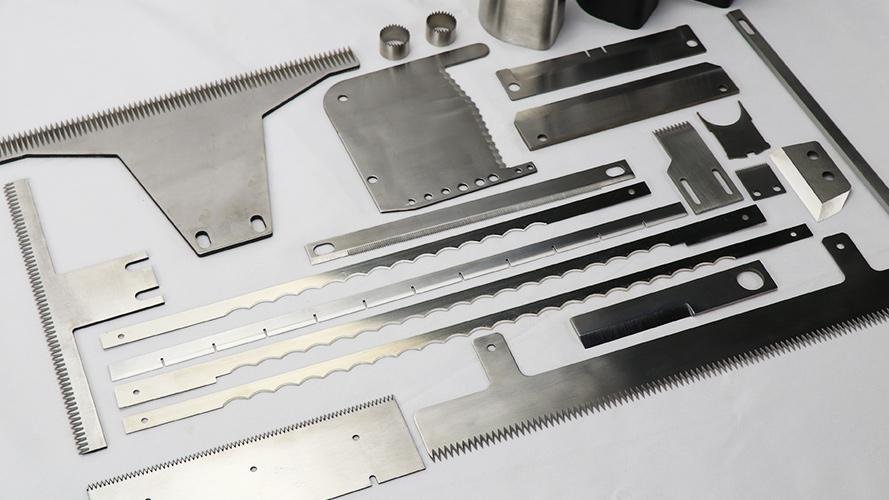
Common profiles include Straight, Wavy, Serrated, Triangular, Trapezoidal, and Alternate Tooth designs. Each is engineered for a specific material and cutting action. For example, a Straight Tooth is great for general cuts, while a Serrated Tooth is better for tougher materials.
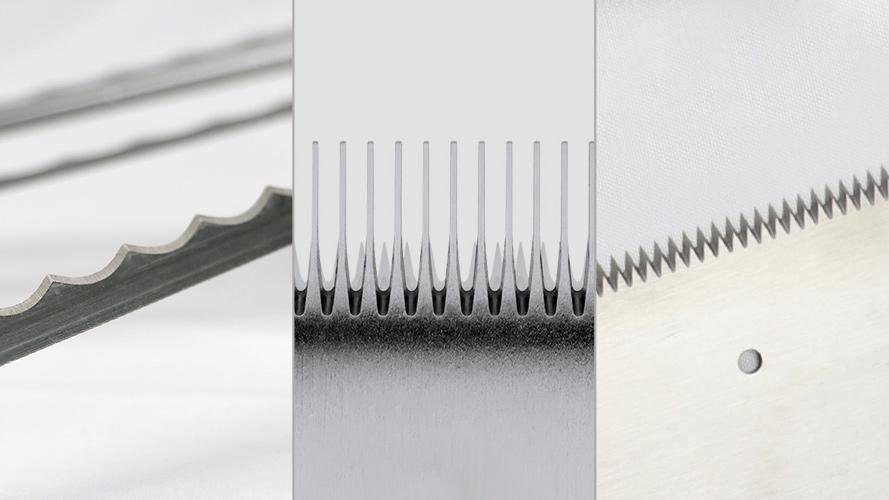
The variety of profiles can seem overwhelming, but each one exists to solve a specific problem. The goal is to create the most efficient cut with the least amount of force and waste. By understanding the purpose behind each design, you can easily narrow down your options and find the perfect fit for your production line.
Profile Types And Their Uses
A plastic film converter in Germany contacted me because they were dealing with stringing and melting when cutting thin, flexible films at high speeds. They were using a standard blade with a Straight Tooth profile, which was generating too much friction and heat4. I suggested they switch to a Wavy Tooth profile. The continuous, undulating edge of the wavy design creates more of a slicing or shearing action, which is much gentler on delicate materials. It cut the film cleanly without generating the heat that caused melting and stringing. As a result, their scrap rate dropped by over 15%, and they could even increase their line speed. It was a clear win, all thanks to changing the profile.
| Profile Type | Best For | Key Advantage |
|---|---|---|
| Straight Tooth | General-purpose cutting on uniform materials. | Simple, effective, and provides a clean, straight cut. |
| Serrated Tooth | Tough, fibrous, or hard-to-cut materials. | Reduces cutting force through an intermittent cutting action. |
| Alternate Tooth | Laminated or composite materials. | Balances cutting forces and reduces chipping on layered materials. |
| Wavy Tooth | Thin films, foils, and flexible materials. | Creates a clean, shearing cut that prevents stringing and tearing. |
How Should Blade Tooth Profiles Be Selected Based On Application Scenarios?
Does a great blade profile sometimes fail in the wrong application? This mismatch happens often, leading to poor results and unnecessary costs. Matching the profile to your material and process is the final, critical step.
You should select tooth profiles based on material hardness, thickness, and cutting speed. For hard, thick materials, choose profiles with high tooth strength and wide pitch. For thin materials or high-speed cutting, use profiles with a finer pitch for a cleaner cut.
Theory is one thing, but application is everything. The perfect blade on paper is useless if it does not perform on your factory floor. You have to consider the complete picture: what you are cutting, how you are cutting it, and what you want the final product to look like. This holistic approach ensures you get the performance and blade life you expect.
Matching Profile To Application
I remember working with a food processing plant in Brazil that was cutting large, frozen blocks of fruit. Their existing blades, which had a fine, triangular tooth profile, were dulling very quickly and even chipping. The fine teeth were too fragile for the hard, frozen material. I helped them transition to a blade with a Trapezoidal Tooth profile and a wider pitch. The flat top of the trapezoidal tooth gave it superior strength to handle the impact of cutting the frozen blocks. The wider pitch prevented ice and fruit pulp from clogging the teeth. Their blade lifespan more than doubled, and machine downtime for blade changes was cut significantly. It was a perfect example of matching the blade profile to the harsh reality of the application.
| Application Scenario | Key Challenges | Recommended Profile & Features |
|---|---|---|
| Thick, Hard Plates | High cutting forces, chip evacuation | Trapezoidal or Serrated Tooth; wider pitch, strong tooth contour. |
| Thin Films & Foils | Tearing, stringing, heat generation | Wavy or fine Straight Tooth; narrow pitch, sharp angles. |
| Fibrous Materials | Fraying, incomplete cuts | Serrated or Alternate Tooth; sharp points, slicing action. |
| High-Speed Cutting | Heat buildup, rapid wear | Profile with good chip clearance; consider coatings for durability. |
Conclusion
Selecting the right industrial saw blade tooth profile is not a small detail. It is central to improving cutting quality, extending blade life, and reducing operational waste and costs.
Effective chip removal is key to maintaining cutting performance and preventing damage. ↩
Understanding cutting forces can help optimize your machining processes for better results. ↩
Explore this resource to understand the root causes of frayed edges and effective solutions to enhance your cutting processes. ↩
Understanding friction and heat is crucial for optimizing blade performance and extending lifespan, ensuring efficient cutting processes. ↩