Skip to content
Are blade failures and frequent changes hurting your production? This downtime eats into profits and adds stress. PM steel offers a durable, reliable solution to these common cutting problems.
Powder Metallurgy (PM) steel is made from atomized metal powders fused under high pressure and heat. This process gives it superior wear resistance1, toughness2, and uniformity3, making it ideal for high-performance industrial cutting tools that last longer and cut cleaner than traditional steels.
What makes it so much better than conventional steel? Let's break down the specific benefits you can expect. This will help you understand if it's the right choice for your needs.
How Does PM Steel Achieve A Superior Balance Of Wear Resistance And Toughness?
Do your blades chip when cutting tough materials? Or do they wear out too quickly? Finding a blade that is both tough and wear-resistant can feel impossible.
PM steel's unique manufacturing process creates a very fine and uniform grain structure. It eliminates the large, brittle carbides found in conventional steels. This structure provides exceptional wear resistance without sacrificing the toughness needed to prevent chipping and fractures during high-impact cutting operations.
In traditional steel manufacturing, the metal is melted and cast. This often leads to something called carbide segregation4. Basically, hard particles called carbides clump together unevenly. These clumps create weak spots that make the blade brittle and prone to chipping. The ASM Handbook, a key resource in our industry, confirms that the PM process solves this exact problem. Instead of melting, we start with a fine alloy powder. We fuse these powders together under immense heat and pressure in a process called sintering5, then densify it further with Hot Isostatic Pressing (HIP)6. This method ensures the hard carbides are distributed perfectly evenly throughout the steel. This means you get a blade that holds its edge for a very long time but is also tough enough to handle shocks and high-impact cuts without breaking.
The Uniform Microstructure Advantage
I remember a client in Germany who runs a metal processing facility. They were manufacturing components for heavy construction equipment, cutting high-strength steel plates. Their standard high-speed steel7 blades were chipping constantly, leading to dangerous line stoppages and a lot of wasted material. They were frustrated and losing money. We supplied them with a set of slitting blades made from Vanadis 4 Extra8, a tough PM steel grade. The results were night and day. The uniform toughness of the PM steel completely eliminated the chipping problem, and they could run their lines faster and safer.
| Feature | Conventional Steel (e.g., D2) | Powder Metallurgy Steel (e.g., Vanadis 4) |
|---|---|---|
| Carbide Size | Large and uneven | Small and uniform |
| Toughness | Moderate | High to Very High |
| Chip Resistance | Prone to chipping | Excellent resistance |
| Predictability | Inconsistent performance | Highly reliable and predictable |
Can PM Steel Really Extend A Blade's Life By 2-3 Times?
Are you constantly stopping production to change dull blades? This lost time adds up quickly. What if you could significantly reduce the frequency of your blade changes?
Yes, absolutely. The uniform distribution of high-content alloy carbides, like vanadium, in PM steel gives it incredible edge strength and wear life. This often results in blades lasting two to three times longer, and sometimes even more, than those made from standard D2 or M2 high-speed steels.
The secret to a blade's long life is its ability to resist wear. In PM steel, we can add a higher percentage of wear-resistant elements, especially vanadium. Vanadium forms extremely hard carbides that protect the cutting edge from abrasion. In traditional steel, adding too much vanadium makes the steel very brittle and difficult to work with. But because the powder metallurgy process distributes these carbides so finely and evenly, we can get the wear resistance benefits without the brittleness. A blade with an even structure wears down smoothly and slowly. A blade with clumps of carbides develops weak points that dull and chip quickly. This is why a PM steel blade doesn't just last a little longer—it provides a major leap in operational life.
The Science Behind Longer Life
I worked with a large corrugated board manufacturer in the United States that was struggling with this exact issue. Their slitter knives were made from standard D2 steel, and they were changing them every single shift, sometimes more. The downtime was a huge bottleneck for their entire operation. I recommended they test a set of our blades made from ASP23 PM steel. They were skeptical at first, but the results were undeniable. They went from changing blades daily to changing them just once a week. The extended life of the PM steel blades saved them hundreds of hours of downtime and thousands of dollars in replacement blade costs over the year.
| Application | Standard HSS/D2 Blade Life | PM Steel Blade Life | Lifespan Increase |
|---|---|---|---|
| Paper Slitting | 8-16 hours | 48-72 hours | 3-6x |
| Metal Shearing | ~100,000 cuts | ~300,000 cuts | 3x |
| Plastic Granulating | 1-2 weeks | 4-6 weeks | 2-4x |
Why Is PM Steel Better For Manufacturing High-Precision Blades?
Do you need blades with extremely precise and complex geometries? Standard materials can warp during heat treatment or be difficult to machine to tight tolerances, compromising the final tool's quality.
PM steel exhibits excellent machinability and dimensional stability. Its uniform, fine-grained structure allows for grinding to very sharp edges and complex shapes without the risk of micro-chipping or distortion. This makes it the perfect material for high-precision tools like thin-section blades and complex punching blades.
When you try to grind a traditional steel blade to a very fine edge, you are essentially grinding against those large, unevenly spaced carbides. This can cause the edge to chip away on a microscopic level, preventing a truly perfect, sharp finish. It can also cause stresses that lead to warping when the blade is heat-treated. With PM steel, the story is completely different. The material behaves predictably. Grinding is smoother because the abrasive wheel interacts with a consistent, uniform structure. This allows us to achieve much higher precision, sharper edges, and tighter tolerances. The steel also remains stable during heat treatment, so the precise shape we create is the shape you get in the final product.
Achieving Tighter Tolerances
I have a great example of this from a client in Japan who manufactures specialty chemical fibers. Their process required incredibly thin and sharp staple fiber cutting blades, with a tolerance of just a few microns. Any slight imperfection on the blade's edge would snag the delicate fibers and ruin the product. Their previous supplier struggled to meet these specifications consistently. We used ASP60, a PM steel grade known for its exceptional hardness and stability, to produce their blades. The result was a perfectly consistent cut, run after run. Our ability to machine this advanced material to their exact needs helped them significantly improve their product quality and reduce waste.
| Characteristic | Conventional Steel (e.g., M2) | Powder Metallurgy Steel (e.g., ASP60) |
|---|---|---|
| Grindability | Fair; risk of edge chipping | Excellent; smooth finish |
| Heat Treat Stability | Moderate; some distortion | High; minimal distortion |
| Achievable Sharpness | Good | Excellent to Superior |
| Dimensional Accuracy | Good | Excellent |
How Can PM Steel Be Customized For Specific Cutting Jobs?
Does a standard, off-the-shelf blade fail to meet your unique cutting needs? Every application is different, and a one-size-fits-all approach rarely works for demanding industrial processes.
The powder metallurgy process allows for precise control over the steel's chemical composition. By adjusting the ratios of elements like vanadium, tungsten, chromium, or molybdenum, we can engineer a PM steel alloy with tailored properties for hardness, toughness, corrosion resistance, or heat resistance.
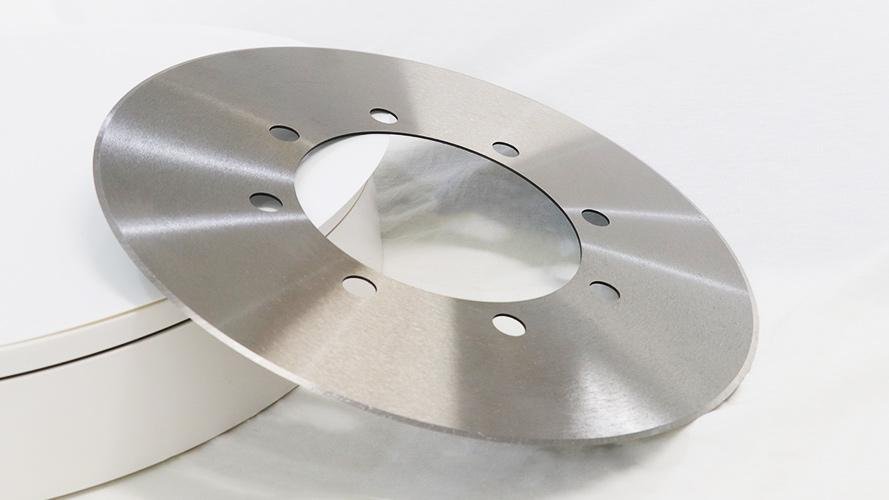
Think of it like a recipe. With traditional steelmaking, it's hard to get all the ingredients mixed perfectly. With powder metallurgy, we start with precise powders of each element. We can mix them in exact ratios to create a custom alloy designed for a specific challenge. Do you need a blade for a high-temperature environment? We can increase the tungsten and cobalt content. Do you need a food-grade blade9 that is also extremely wear-resistant? We can formulate an alloy with high levels of both chromium for corrosion resistance and vanadium for durability. This level of customization just isn't possible with conventional cast steels. It allows us, as blade manufacturers, to move beyond selling a simple product and instead provide a true cutting solution.
Tailoring Performance With Alloying
I remember working with a food processing company in Brazil. Their application was cutting large blocks of frozen fruit. This is a surprisingly tough job—it's abrasive, high-impact, and requires food-safe materials. Their standard stainless steel blades were becoming dull in just a few hours. This meant constant production stops. We developed a custom solution for them using Vanadis 1010. This is a PM steel with a high percentage of vanadium carbides for incredible wear resistance, but also enough chromium to provide excellent corrosion resistance. They finally got the long blade life they needed without ever compromising the food safety standards of their facility.
| PM Steel Grade | Key Alloying Element(s) | Primary Advantage(s) | Common Industry |
|---|---|---|---|
| ASP23 | Vanadium, Molybdenum | Good balance of wear resistance and toughness | Packaging, Paper |
| Vanadis 4 Extra | Vanadium, Molybdenum | Exceptional toughness and chip resistance | Metal Forming, Stamping |
| ASP60 | High Vanadium, Cobalt | Extreme wear resistance and hardness | Chemical Fiber, Composites |
| Vanadis 10 | High Vanadium, Chromium | Extreme wear and corrosion resistance | Food Processing, Plastics |
Conclusion
PM steel offers unmatched performance through its unique manufacturing process. Its superior toughness, wear resistance, and customizability make it the best choice for demanding industrial cutting applications.
Understanding wear resistance can help you choose the right tools for longevity and efficiency. ↩
Learn about toughness and its critical role in preventing blade failures during cutting operations. ↩
Discover how uniformity in materials enhances performance and reliability in cutting applications. ↩
Understanding carbide segregation can help you appreciate the advantages of PM steel over traditional methods. ↩
Explore the sintering process and its significance in creating high-quality materials like PM steel. ↩
Learn about HIP and how it enhances the properties of materials used in cutting tools. ↩
Explore the characteristics of high-speed steel and how it compares to PM steel. ↩
Discover the unique properties of Vanadis 4 Extra and its applications in cutting tools. ↩
Discover the standards and materials needed for food-grade blades in processing applications. ↩
Explore the advantages of Vanadis 10 and its applications in demanding environments. ↩