Skip to content
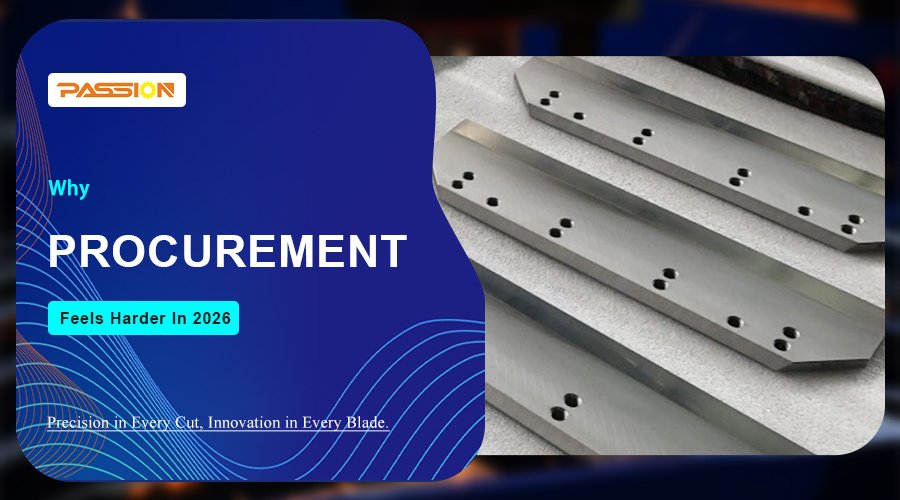
If you work in the industrial blade industry, you may feel that this year’s procurement efforts are more challenging than ever—rest assured, you are not alone. This widespread sentiment does not stem from the specific difficulties faced by any single company or individual, but rather from a profound shift in the market: the manufacturing sector is rapidly splitting into two distinct camps.
Understanding this phenomenon of “polarization” is the key to resolving today’s procurement challenges.
Camp Polarization: The Balance Between Stability And Risk
After weathering cost increases and market volatility in recent years, the supplier ecosystem has undergone a significant restructuring.
On one side are well-established, stable, and reliable manufacturers.
These companies boast sound financial health, mature quality control systems, and robust supply chain management capabilities. They may not offer the lowest prices on the market, but they invest resources in ensuring product performance consistency and delivery reliability, aiming to become long-term partners customers can trust.
On the other side are high-risk suppliers who could “drop the ball” at any moment.
Under immense cost pressure, these suppliers rely solely on low prices to secure orders. To survive, they may be forced to compromise on raw materials, production processes, or quality control. Choosing them means choosing uncertainty—a risk of supply disruptions at any moment due to cash flow shortages, quality incidents, or operational issues.

The Evolution Of The Procurement Role: From “Price Negotiation” To “Risk Management”
This market polarization is fundamentally transforming the role of procurement professionals.
In the past, information asymmetry meant that one of the core tasks of procurement was to secure better prices through negotiation skills. Today, however, with raw material costs remaining persistently high, prices have become more transparent than ever—but supplier stability has not.
A harsh reality is that a 5% to 10% price difference between suppliers is no longer sufficient to cover the massive losses resulting from a single supply disruption or quality incident.
Consequently, the focus of your work has quietly shifted: it is no longer merely about price negotiations, but about risk management centered on stability. Today’s procurement professional is more like a risk assessor, needing to look beyond the surface of prices to identify and evaluate the true operational status and fulfillment capabilities of suppliers.

Conclusion: Choosing A Supplier Is Choosing A Way Of Working
In this new era, selecting a supplier means far more than simply placing a purchase order.
Choosing the right supplier saves you far more than just money; it spares you endless headaches—such as dealing with sudden quality issues, explaining delivery delays to customers, and the immense effort required to find emergency alternatives when production grinds to a halt.
Ultimately, a reliable partner saves you your most valuable resource: the time and energy that you and your team can dedicate to your core business, rather than constantly putting out fires.