Skip to content
Food Packaging Processing Blade
The right blade is critical for food packaging integrity, efficiency, and aesthetics. PASSION specializes in manufacturing blades that deliver clean cuts, strong seals, and flawless performance across various applications, from form-fill-seal to shrink wrapping and custom tasks.
Display of Food Packaging Processing Blades We Have Manufactured
This gallery showcases PASSION’s extensive manufacturing capabilities for the food packaging industry. From standard VFFS knives to custom-engineered blades, we leverage premium materials and precision grinding to deliver exceptional sharpness, wear resistance, and flawless cutting performance.


Let's Talk About Your Cutting Needs
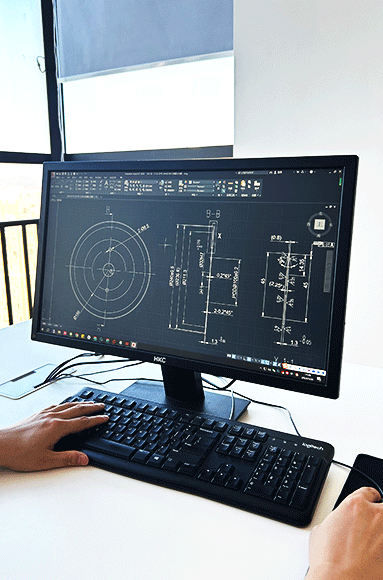
Please let us know what type of food packaging processing blades you require and send us the technical drawings so as to get a quotation. Alternatively, tell us what materials they will be used to cut, and send us pictures and dimensions of the blades, and we will provide you with a quotation.
Types of Food Packaging Processing Blades
The right blade is critical for high-speed packaging. Its type, tooth profile, and material all determine production efficiency and package integrity. PASSION offers a full range of standard blades for major applications and expert custom solutions for your unique cutting challenges.

Form-Fill-Seal (FFS) Blades
As core components of Vertical (VFFS) and Horizontal (HFFS) / Flow-Wrapping machines, FFS blades are used to seal and separate packages after filling. We can customize various tooth profiles based on your film material and sealing requirements, including serrated, V-tooth (Zig-Zag), straight edge, and special blades with easy-tear notches, ensuring strong seals and clean cuts.

Tray & Carton Forming/Sealing Blades
These blades are used in tray sealers and carton forming equipment, demanding exceptional dimensional accuracy and rigidity to ensure precise forming and sealing. We leverage our precision machining capabilities to produce highly compatible forming and sealing blades that deliver uniform cuts every time, enhancing the quality of the final product.

Vacuum & Sachet Packaging Blades
Vacuum and sachet packaging applications require blades that deliver clean cuts while maintaining perfect seal integrity. We specialize in producing high-precision blades for such equipment. Whether for cutting tough vacuum bags or creating fine four-sided-seal sachets, our blades provide outstanding durability and consistent performance.

Film Wrapping Blades (Shrink/Overwrap)
Widely used in shrink-wrapping and over-wrapping machines, the key for these blades is to cut thin films quickly and cleanly without pulling or tearing. We optimize the blade edge angle and material for different film characteristics (e.g., PE, POF, PVC) to effectively reduce film residue, keeping equipment clean and production continuous.

Tamper-Evident (Perforating) Blades
These blades typically feature fine perforating teeth to create tamper-evident or “easy-open” packaging that is convenient for consumers while remaining secure. PASSION can precisely control the pitch and depth of the perforations, helping you achieve the perfect balance between consumer convenience and product security.

Custom Engineered & Specialty Blades
Facing a unique cutting challenge? Our experienced engineering team specializes in developing custom blade solutions. From non-standard shapes and unique tooth profiles to proprietary material coatings for enhanced performance, we partner with you to design and manufacture the perfect blade for your specific application, improving efficiency and solving your toughest production problems.
A Guide to Blade Edge Geometry & Tooth Profiles
Understanding a blade’s macro-level profile (Tooth Profile) and its micro-level edge (Edge Geometry) is key to selecting the right tool and enhancing production efficiency. PASSION offers not only a diverse product range but also expert knowledge to help you make the best decision.
No.1
Blade Edge Geometry - The Core of Cutting Quality & Lifespan
A perfect cut begins with the blade’s micro-geometry. Different edge designs directly impact cutting force, blade durability, and the final effect on the packaging film. PASSION offers a variety of precision-ground edges to meet the most demanding production needs.

Double Bevel / V-Edge
Description: The most common and versatile edge form, where two bevels converge at a specific angle to form a symmetrical cutting edge. The balance between edge strength and sharpness can be adjusted by modifying the angle.
Advantages: Robust structure, excellent durability, and mature manufacturing process. Suitable for a wide range of general-purpose cutting tasks.
Applications: Widely used for cross-cutting and slitting applications where extreme precision is not the primary concern, but blade life and stability are crucial, such as in carton forming and cutting thicker composite films.

Single Bevel / Chisel Edge
Description: Also known as a chisel edge, it is ground on one side only. This asymmetrical design generates minimal lateral force during cutting, resulting in an exceptionally clean and straight cut.
Advantages: Extremely sharp, high cutting accuracy, minimal debris generation, and produces a smooth, burr-free edge.
Applications: Ideal for high-precision film slitting, label die-cutting, and flexible packaging applications that demand a superior aesthetic finish. The go-to choice for achieving a “mirror-finish” cut.

Compound Bevel / Double-Double Bevel
Description: This design incorporates one or more secondary bevels at a smaller angle on top of the primary cutting edge. It combines the strength of the main edge with the sharpness of the secondary edge.
Advantages: Significantly enhances sharpness and cutting performance while maintaining edge strength. It offers better impact resistance, effectively extending service life in high-intensity operations.
Applications: Excellent for high-speed, high-frequency cutting, such as the cross-seal cutting knives on HFFS (Horizontal Form-Fill-Seal) and VFFS (Vertical Form-Fill-Seal) machines, especially when processing tough, multi-layer composite films.
No.2
Tooth Profile Details - The Key to Achieving Specific Functions
From a clean cutoff to a convenient easy-open feature, the right tooth profile is critical to achieving the desired packaging function. PASSION’s precision CNC machining capabilities ensure every tooth profile is accurate and consistent.
Serrated / Zig-Zag
Description: Composed of a series of continuous V-shaped cutting edges that separate material through a combined tearing and cutting action. Pitch and depth are key parameters.
Advantages: Provides a crisp cutting action and effectively prevents films from stretching or tearing during the cut, especially suitable for elastic films.
Applications: The most commonly used cross-cut blades in VFFS and HFFS machines for sealing and cutting bags for products like chips, candies, and powders.

Scalloped Edge
Description: An edge formed by smooth, continuous concave curves. It cuts like multiple small circular knives acting simultaneously, separating material with a pushing and slicing motion.
Advantages: Produces a very smooth cut with minimal debris and dust, resulting in a clean and aesthetically pleasing edge. It exerts less pressure on the material.
Applications: Used for cutting packaging for products requiring high integrity, such as bakery items (bread, cakes) and fresh vegetable salads.

Perforating / Tear-Notch Blade
Description: Creates intermittent cuts on the blade edge to form a line of connected breakpoints. The length and spacing of the cuts can be precisely controlled to achieve the desired tear strength.
Advantages: Used to create “Easy-Open” perforations, making it convenient for end-users to open the package while maintaining its overall seal integrity.
Applications: Ideal for creating tear notches on snack bags, perforations on yogurt cup lids, and vent holes in shrink film.

No.3
PASSION Blade Configuration Guide - The Optimal Combination for Your Application
The right combination of “Tooth Profile” and “Edge Geometry” is crucial for achieving superior performance. The table below will help you quickly identify the best blade solution for your needs, or serve as a starting point for in-depth discussions with our engineers about custom solutions.
Tooth Profile | Standard Double Bevel | Compound Bevel | Single Bevel |
Straight Edge | General Purpose | High-Speed Use | Ultimate Precision |
Zig-Zag | Standard Packaging | Demanding Conditions | Uncommon Combination |
Perforating | Standard Easy-Open | Tough Films | Uncommon Combination |
Materials of Food Packaging Processing Blades
Choosing the right material is crucial for blade performance and longevity. At PASSION, we offer a range of premium materials to meet your specific application needs:
Stainless Steel (420 / 440C)
- Key Attributes: Excellent corrosion resistance, high toughness.
- Best For: Humid environments or applications involving acidic food products where rust prevention is a top priority.
Tungsten Carbide (WC)
- Key Attributes: Unparalleled hardness and wear resistance, offering the longest operational lifespan.
- Best For: The most demanding, high-volume production lines, cutting abrasive or tough materials, and minimizing downtime for blade changes.
High-Speed Steel (HSS)
- Key Attributes: Exceptional hardness even at high temperatures; resistant to softening from friction.
- Best For: High-speed cutting operations that generate significant heat, ensuring the blade edge remains sharp and effective.
D2 Tool Steel
- Key Attributes: High wear resistance and excellent edge retention at a moderate cost.
- Important Note: D2 is a high-carbon tool steel with lower corrosion resistance than stainless steel. Proper cleaning and maintenance are required in humid environments.
- Best For: High-volume applications where durability and wear are the main concerns and cost is a factor.
Types of Coatings for Food Packaging Blades
A blade coating is a micro-thin film applied to the surface of a blade to significantly enhance its properties. The right coating can dramatically extend blade life, reduce friction, and prevent material buildup, ultimately boosting your production efficiency.
TiN (Titanium Nitride)
The General-Purpose Wear Resistance Solution.
The Problem
Standard blades wear down too quickly in continuous production, leading to frequent downtime and increased operational costs.
The Solution
TiN coating significantly increases surface hardness for excellent wear resistance, effectively extending the blade’s service life. Its distinctive gold color also serves as a helpful visual wear indicator.
DLC (Diamond-Like Carbon)
The Ultimate Anti-Stick Solution.
The Problem
Cutting sticky materials like cheese, confectionery, or adhesive tapes causes material to build up on the blade, resulting in messy cuts, drag, and production halts for cleaning.
The Solution
DLC coating provides an ultra-hard, extremely low-friction surface. This “non-stick” property ensures materials slide off effortlessly, leading to clean cuts and uninterrupted production, even in the most demanding sticky applications.
CrN (Chromium Nitride)
The Comprehensive Protection Solution.
The Problem
The operating environment is humid, requiring a blade that not only resists wear and sticking but also offers excellent rust prevention, a challenge for single-purpose coatings.
The Solution
CrN coating offers a balanced, “all-in-one” performance. It combines high hardness, effective anti-adhesion properties, and superior corrosion resistance, making it the ideal choice for complex environments where multiple threats exist.
Choose the Right Blades for Packaging Machine
PASSION specializes in high-precision, durable blades for leading packaging machinery like VFFS, thermoformers, and tray sealers. Our expert engineering solutions are tailored to your equipment to optimize production lines, enhance performance, and improve final product quality.

Blades For VFFS & HFFS Machines
Description: Used in Vertical (VFFS) and Horizontal (HFFS) / Flow-Wrapping machines for cross-seal cutting and longitudinal slitting. The blade designs are optimized for different film properties to achieve efficient cuts and seals in high-speed production.
Main Products: Flow Wrapping Knives, Shrink Wrapping Knives, Pouch Knives, Straight-Cut Knives, Bagger Knives.
Compatible Machinery: ACMA, Hayssen, Cryovac, Matrix, Doboy, Bosch, Sandiacre, Rovema, Ilapak, Fuji, and more.
Blades For Thermoforming Machines
Description: Applied to cross-cutting, slitting, and contour punching on thermoforming machines (for vacuum/skin packaging). High dimensional accuracy ensures container quality and clean, burr-free edges, critical for perfect seal integrity and package appeal. Precision control for perforator hole patterns and pitch.
Compatible Machinery: Multivac, GEA, ULMA, Alkar Rapid Pak, Hooper, Cryovac, Dixiepac, Rollstock, JVR Industries, and more.


Blades For Tray Sealers & Cup Sealers
Description: Designed for cutting sealing films on preformed trays, containers, and cups. Knives can be customized to container shapes (round, square, irregular). Their precision and rigidity ensure accurate cutting profiles and smooth edges, vital for tight seals.
Main Products: Tray Sealing Knives, Cup Sealing Knives, Single-Serve Cup Knives, Pod Knife Punches.
Compatible Machinery: Proseal, Mondini, Reepack, Ishida, Osgood, ULMA, Multivac, ICA, Arpac, Ampak, Modern, Optima, Ultrasource, and more.
Solutions for Packaging & Cutting Challenges
On high-speed automated production lines, a minor blade issue can lead to decreased efficiency, increased costs, and even compromised product quality. A deep understanding of the root causes of these problems and the adoption of targeted technical solutions are key to maintaining stable and efficient production.
The Scenario
When slitting or cross-cutting films like LLDPE or BOPP at high speeds, thin, hair-like plastic residues (known in the industry as "Angel Hair") accumulate on the blades and machinery. Concurrently, the film is stretched, leading to wrinkled packaging, inconsistent dimensions, and compromised seal integrity. This not only contaminates the product but also necessitates frequent downtime for cleaning, making it one of the most frustrating problems in the packaging industry.
Technical Solutions
Optimizing Edge Geometry: The core of this problem lies in excessive cutting force "pushing" the material apart rather than "shearing" it. An effective countermeasure is the use of a Single Bevel Edge. Its asymmetrical design shears the film cleanly with minimal lateral force, which, based on physical principles, reduces tearing and stretching, thereby suppressing the formation of "Angel Hair."
Enhancing Surface Finish: The microscopic roughness of a blade's edge is a primary cause of friction. Through precision grinding and polishing processes, a near-mirror finish can be achieved. An extremely smooth edge minimizes friction, allowing the film to glide past without catching or dragging, thus preventing stretching.
Selecting Materials with High Edge Retention: A decline in blade sharpness directly leads to a decrease in cutting quality. For production lines operating at high speeds for extended periods, Tungsten Carbide Inlay (TC Inlay) or Solid Tungsten Carbide blades, due to their superior hardness and wear resistance, can maintain edge sharpness for much longer, ensuring consistent cutting quality over time.
The Scenario
When cutting materials containing sugar (e.g., candy wrappers), grease (e.g., baked goods), or adhesives (e.g., labels), residue quickly adheres to and builds up on the blade edge. This increases cutting resistance, results in unclean cuts, and often forces shutdowns for time-consuming manual cleaning every couple of hours, severely impacting OEE (Overall Equipment Effectiveness).
Technical Solutions
Applying Low-Friction Surface Coatings: Applying functional coatings is a primary solution in the industry. For example, a Teflon (PTFE) coating, due to its extremely low surface energy, can significantly reduce the adhesion of sticky substances like sugar, oil, and adhesives. The cleaning cycle for coated blades can be substantially extended.
Utilizing Mirror Polishing Process: The smoothness of the physical surface can also effectively resist adhesion. A mirror-grade polish eliminates the vast majority of microscopic pits where residue could grip, making the blade surface inherently resistant to buildup.
The Scenario
Production lines are frequently stopped for blade changes due to wear. This not only increases the cost of the blades themselves but, more importantly, the losses from downtime, labor, and recalibration far exceed the blade's value. This is especially true when cutting packaging materials containing glass fibers, mineral fillers (like calcium carbonate), or abrasive powders (like seasonings).
Technical Solutions
Using High-Hardness, Wear-Resistant Materials: One of PASSION's core technical capabilities is the manufacturing of Tungsten Carbide blades. The hardness of tungsten carbide (HRA 88-92) is far superior to High-Speed Steel (HSS), with wear resistance dozens of times greater than traditional steels. Under the same working conditions, the total production uptime and overall benefit provided by a single carbide blade typically far exceed those of traditional steel blades.
Adopting A Strengthened Edge Design: Edge toughness directly impacts blade life. For high-impact and demanding applications, the design of a Compound Bevel Edge enhances the support structure at the base of the edge while maintaining sharpness. This effectively resists micro-chipping and rolling, leading to a longer, more stable service life under harsh conditions.
Application-Based Selection Analysis: Professional selection support is a prerequisite for optimization. PASSION's engineering team can assist clients in analyzing their operating conditions—such as materials, speeds, and machine models—to determine, based on scientific data, the blade configuration that achieves the Lowest Total Cost of Ownership.
Applications of Food Packaging Cutting Blades
Our high-performance food packaging processing blades are widely used across multiple sectors. Whether you’re packaging snacks & confectionery, bakery & pasta, fresh produce, dairy products, or meat & poultry, our blades deliver clean, reliable cuts for superior packaging results.
Snacks & Confectionery


Bakery & Pasta


Fresh Produce


Dairy Products


Meat & Poultry