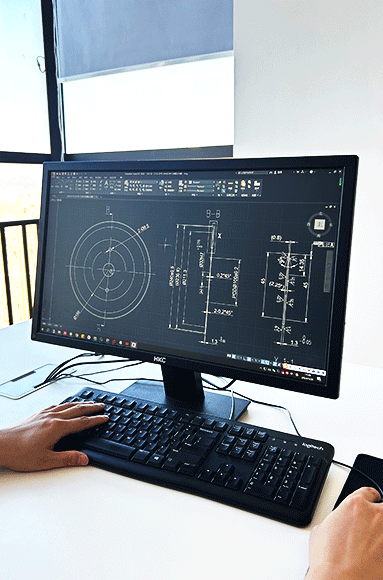
Tissue Paper Log Blade
Passion manufactures big circular blades, long perforating blades, and circular serrated blades for the tissue paper processing industry. Each blade is meticulously crafted to deliver clean, precise, and repeatable cuts on toilet paper, kitchen towels, and other tissue products—even under heavy-duty machine operation.
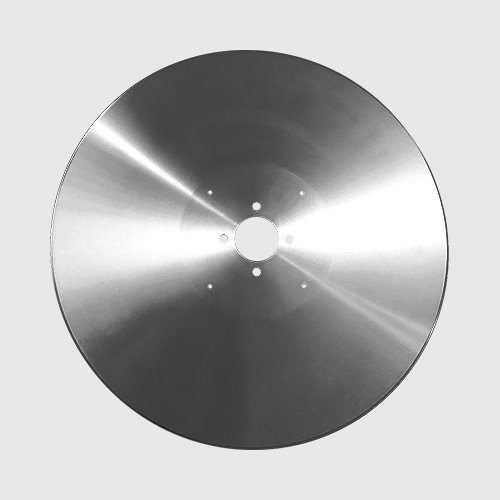
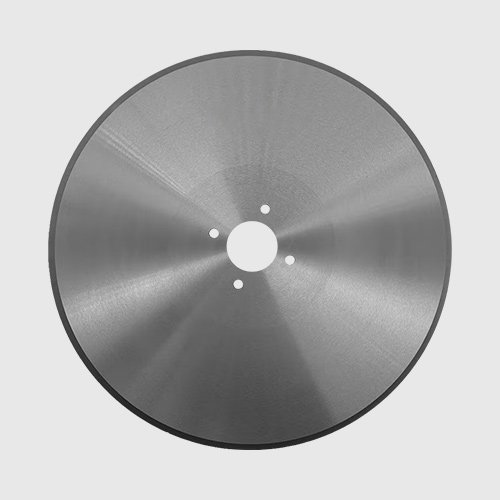
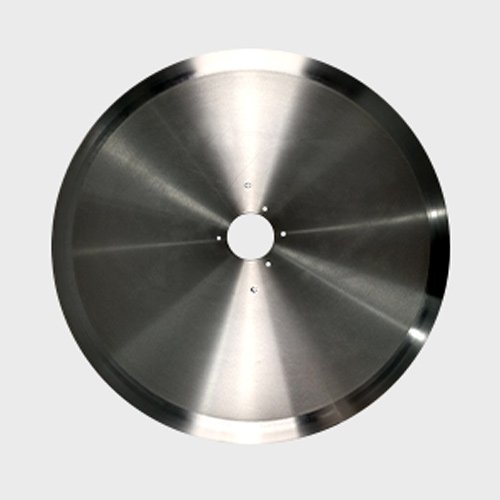
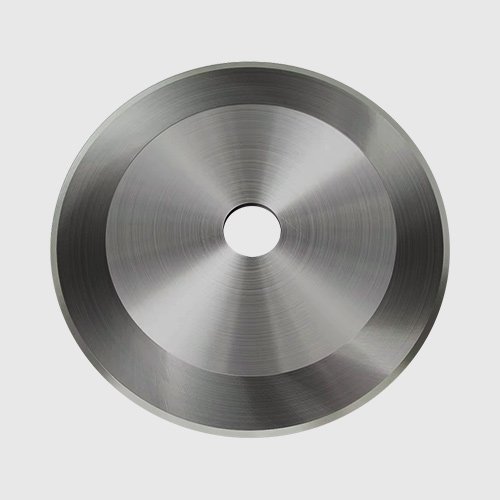
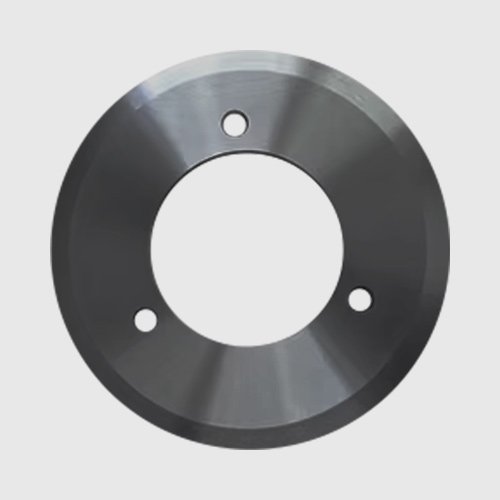
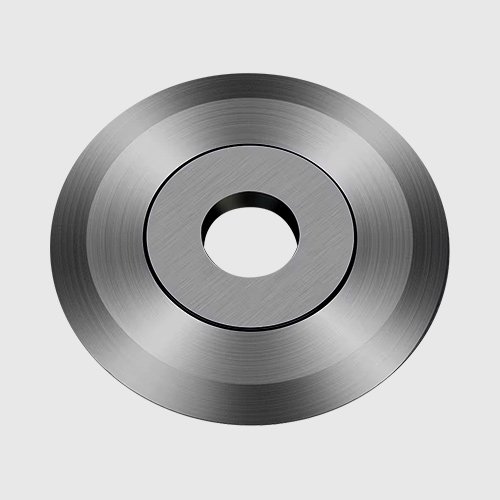
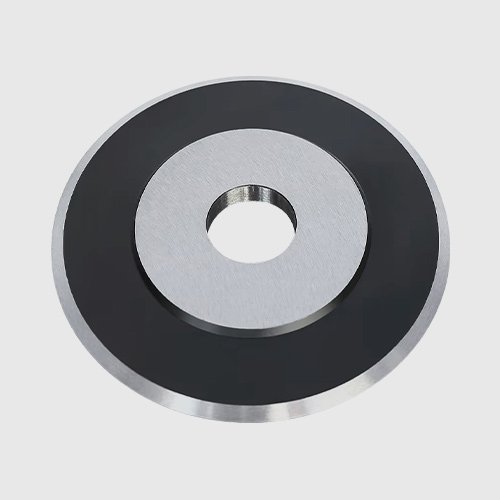
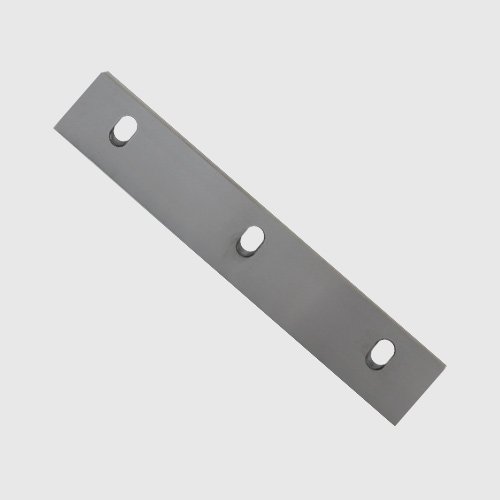
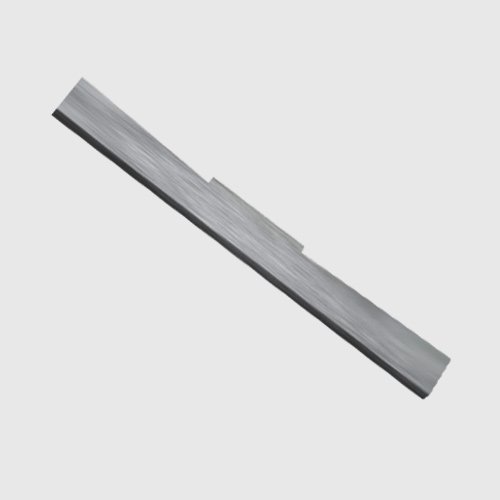
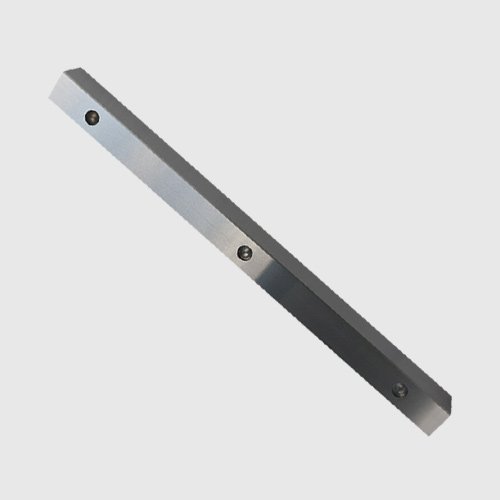
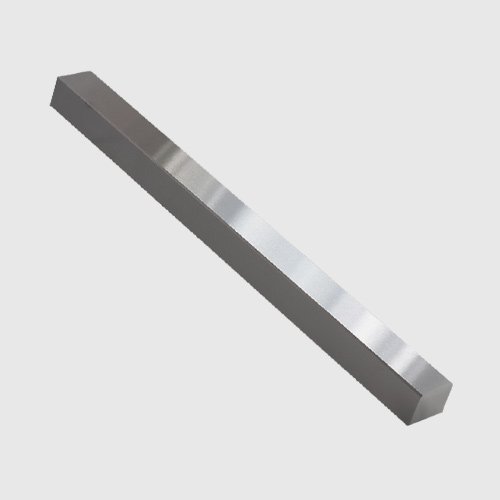
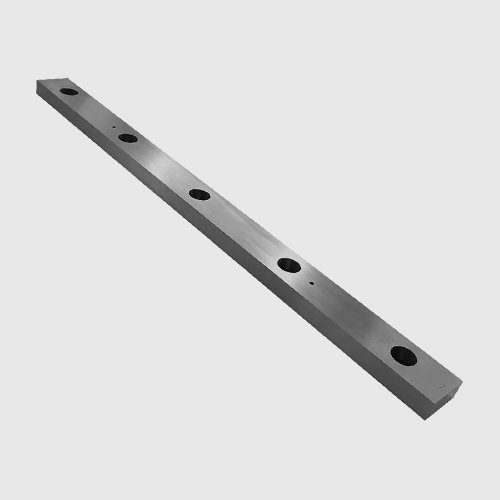
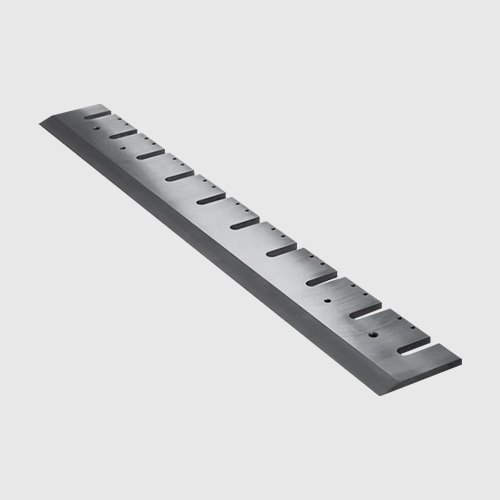
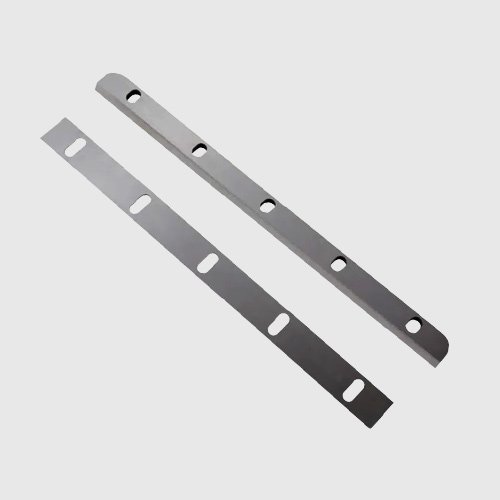
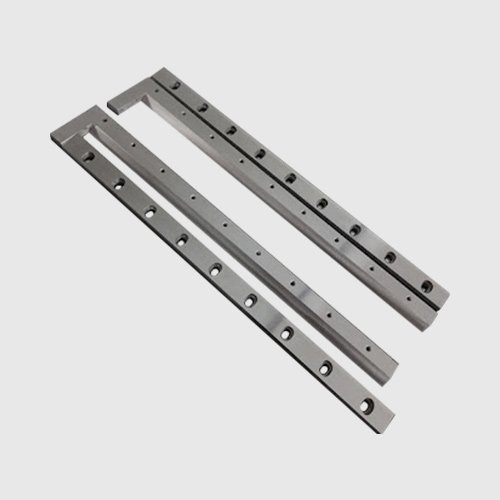
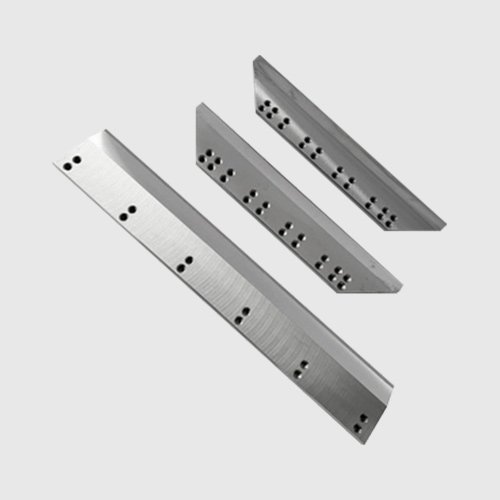
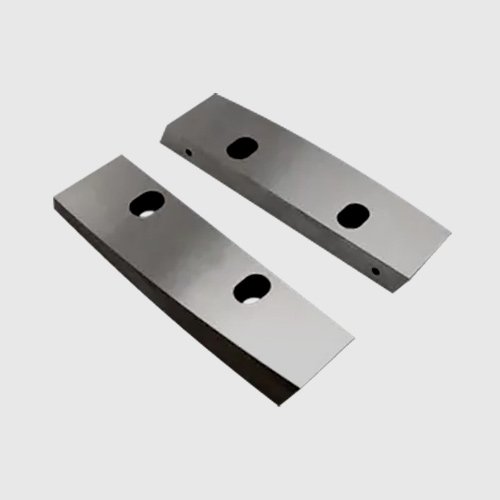
Some Tissue Paper Log Blade on Display
PASSION possesses years of experience in manufacturing high-performance blades, specializing in precision log saw blades to meet the demands for accuracy and continuous operation in the tissue processing industry. Below is a showcase of some tissue paper blades we have produced.



Let's Talk About Your Cutting Needs
Choosing the Passion’s tissue paper log blades and enhance your production efficiency, achieve superior product quality, and reduce operating costs. Please send us the size of the blade you need or the relevant drawings, or let us know whether you require cutting or perforating of the tissue paper, so that we can provide you with a quotation.
Specifications For Tissue Paper Log Blades
The following are the standard sizes of blades used in the tissue paper industry. We can provide custom solutions based on your equipment drawings or specific requirements.
| Blade Type | Common Specifications (mm) | Dimension Breakdown (OD / L × ID / W × T) | Primary Application |
Tissue Slitter Blade | Φ105 × Φ70 × 1.2 |
OD × ID × T |
Used in rewinders or slitters to cut large parent rolls into narrower rolls for downstream processing. |
| Φ105 × Φ65 × 1.5 | |||
| Φ105 × Φ50 × 1.0 | |||
| Φ130 × Φ70 × 1.5 | |||
| Φ140 × Φ70 × 1.5 | |||
Log Saw Blade | Φ610 × Φ68.26 × 3.5-4.7 |
OD × ID × T |
Cuts long tissue logs into final consumer-sized rolls (e.g., toilet paper, kitchen towels). |
| Φ610 × Φ100 × 3.5-4.7 | |||
| Φ510 × Φ80 × 2.8 | |||
Napkin Folding / Cutter Blade | 3000 × 140 × 1.2 |
L × W × T |
Used in napkin converting lines for high-speed, continuous operation across folding, embossing, and cutting stations. |
| 2950 × 150 × 1.2 | |||
| 2000 × 90 × 1.2 | |||
| 375 × 150 × 1.2 | |||
Perforation Knife | 3500 × 50 × 1.4 |
L × W × T |
Creates perforated lines on tissue products (toilet paper, paper towels), allowing for easy tearing of sheets. |
| 2900 × 50 × 1.4 | |||
| 2800 × 50 × 1.4 | |||
| 2500 × 35 × 1.25 | |||
| 1800 × 35 × 1.25 | |||
| 445 × 35 × 2.0 |
Tissue Paper Log Blade Types and Functions?
From the log saw blades that cut paper rolls to the precision knives for making napkins and handkerchiefs, every tissue product relies on specific blades for precise cutting. Below are several key blade types used in the tissue industry and their crucial roles in ensuring product quality and production efficiency.
Log Saw Blade
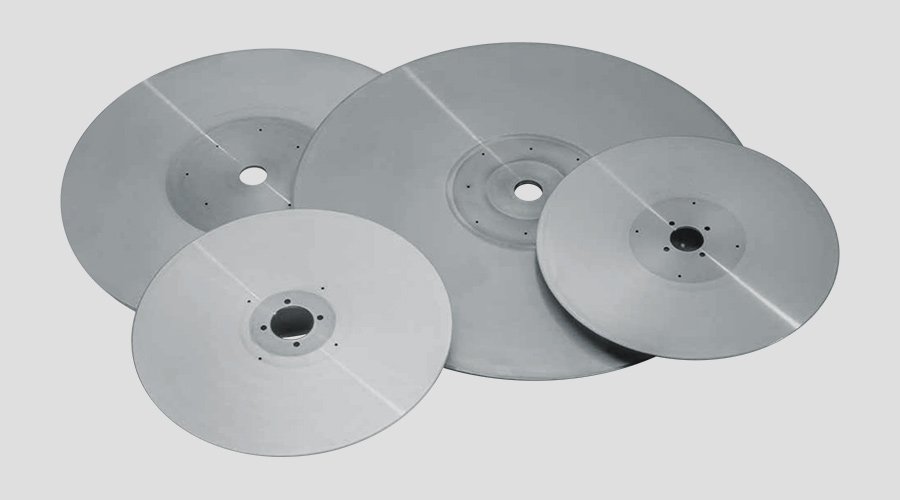
In high-speed tissue converting, the log saw blade is pivotal for final product quality. A superior blade must deliver clean, dust-free cuts at maximum speeds. Our blades are engineered for this, using premium HSS steel and precision grinding for exceptional sharpness and durability. Each blade is dynamically balanced to eliminate vibration, ensuring cut accuracy and extending motor life. Compatible with all major OEMs, they reduce downtime and improve efficiency, delivering consistently perfect rolls.
Perforating and Bed Knives
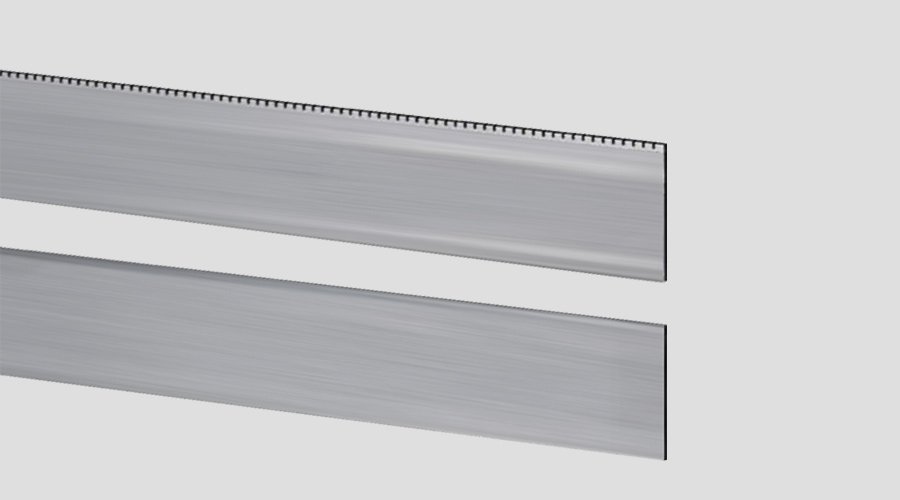
A perfect, easy-to-tear perforation is a hallmark of premium tissue products. This is achieved not by one blade, but by the perfect synergy between the perforating knife and its bed knife. Our knife sets are manufactured as a precision-matched pair, guaranteeing micron-level accuracy for a flawless interaction. This results in a clean cut, consistent tear lines, and significantly longer service life for both components, enhancing the end-user’s experience with every sheet.
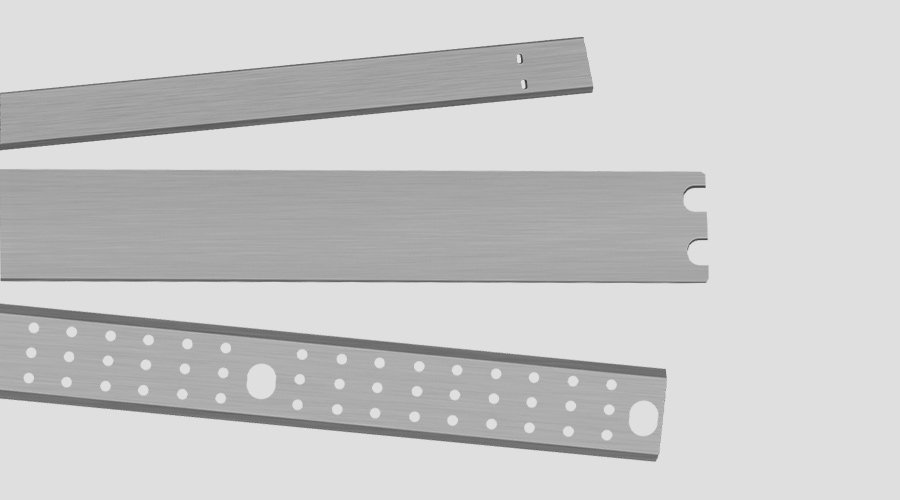
Blades for Napkin Production
Napkin converting lines demand blades that can withstand high-speed, continuous operation across folding, embossing, and cutting stations. Blade failure means costly downtime and wasted material. We supply a full range of durable blades, including slitters and folding knives, engineered for leading machines like W+D and Omet. Their superior wear resistance ensures a consistently sharp edge for clean cuts without stringing, maximizing production uptime and ensuring a premium look for the final product.
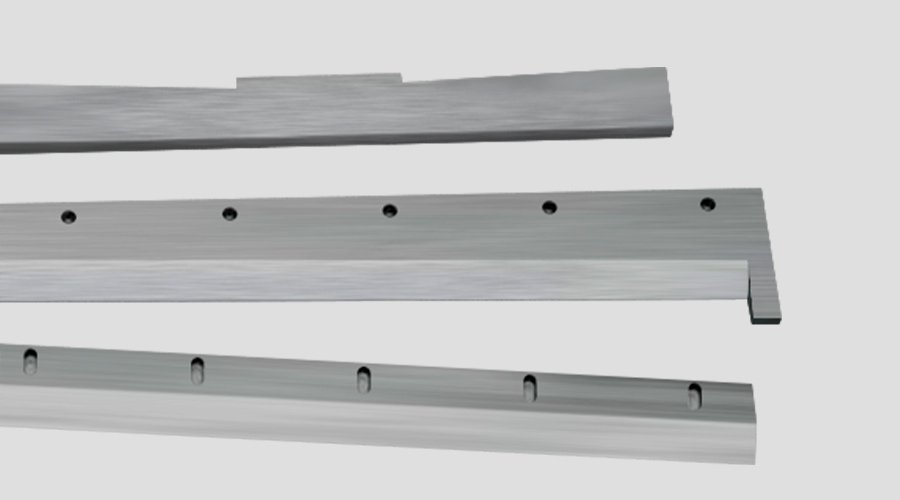
Blades for Handkerchief Paper Production
The final cut of multi-ply pocket handkerchiefs is critical. An improper cut can cause delamination or ply bonding, leading to high reject rates. The solution is an ultra-sharp blade engineered for precision slicing through soft, stacked material. Our blades for W+D and Senning lines are designed to do exactly that. They deliver a flawless, clean edge on every pack, improving product appearance, reducing waste, and ultimately protecting the manufacturer’s brand quality.
What Materials are used for tissue paper log blades?
The selection of an appropriate material for your specific application is critical to ensuring cut quality, extending tool life, and optimizing production efficiency. Below is our objective analysis of the three core industrial blade materials.
High-Speed Steel - HSS
Description: A class of tool steels specifically designed for high-speed cutting. M2 (USA standard, equivalent to China’s W6Mo5Cr4V2) is the most widely used and representative grade in the industry.
Properties: Its defining characteristic is excellent “red hardness.” It can maintain a high level of hardness and a sharp cutting edge even at temperatures up to 500-600°C. It also possesses good toughness, offering a great balance of properties.
Correct Applications: It is the go-to material for high-speed cutting applications where significant frictional heat is generated. It is the industry standard for log saw blades and high-speed perforating knives.
Limitations: Its wear resistance at room temperature is typically slightly lower than that of D2 steel. While excellent, its overall performance can be surpassed by more advanced powder metallurgy steels.
High-Carbon, High-Chromium Steel
Description: This refers to a category of cold-work tool steel, known by various international standards such as D2 (USA), SKD11 (Japan), and 1.2379 (Germany). They share a similar chemical composition, rich in carbon and chromium.
Properties: Its primary property is excellent wear resistance and high hardness at room temperature. This is due to the formation of a high volume of hard chromium carbide particles within the steel’s microstructure.
Correct Applications: Ideal for applications where high wear resistance is critical, but heat generation is low. This includes bed knives / anvil knives (which are stationary), some slitter knives, and blades for cutting hard paper cores.
Limitations: It has poor “red hardness,” meaning it rapidly loses its hardness and cutting edge at the high temperatures generated by high-speed cutting. It is also relatively brittle, making it more prone to chipping under impact compared to HSS.
Tungsten Carbide / WC
Description: It consists of micro-scale tungsten carbide (WC) particles, which are extremely hard, bonded together by a softer, more ductile metal binder, typically cobalt (Co).
Properties: It possesses extreme hardness, approaching that of a diamond, leading to phenomenal wear resistance—many times that of any steel. However, its defining weakness is very low toughness, meaning it is extremely brittle and prone to fracture under shock or vibration.
Correct Applications: It excels in pure wear applications with minimal impact. In tissue converting, it’s the ultimate material for stationary bottom slitter anvils or wear-resistant guide parts. It is almost never used for large, rotating blades like log saws due to its brittleness.
Limitations: The primary limitations are extreme brittleness (cannot tolerate impact, bending, or high vibration), high cost, and the difficulty/impossibility of manufacturing it into large, complex monolithic shapes. It is typically used as small inserts or tips brazed onto a steel body.
How Does Paper Pulp Purity Impact Your Tissue Paper Log Blade's Lifespan?
Not all tissue paper is created equal. The raw pulp composition is a critical, yet often overlooked, factor that directly determines the rate of blade wear. Understanding the composition of the paper you are cutting allows for better blade material selection and production planning.
Properties: Contains the purest and softest fibers, free from abrasive contaminants generated during the recycling process.
Impact On Blade: Minimal Wear. This is the most blade-friendly material, maximizing tool life and enabling the longest continuous production runs.
Properties: Also composed of virgin fibers, but may include inherently harder plant fibers (such as bamboo) or a mix of different fibers.
Impact On Blade: Slight to Moderate Wear. Harder fibers like bamboo slightly accelerate the wear of the cutting edge compared to softwood fibers. Although free of impurities, the physical properties of the fibers themselves are the primary influencing factor.
Properties: Contains recycled fibers. The recycling process inevitably leaves behind tiny hard particles, such as fillers (calcium carbonate/kaolin), fine grit, and even metallic micro-particles.
Impact On Blade: Significant & Accelerated Wear. These microscopic hard impurities act like sandpaper on the cutting edge, causing rapid, severe wear and a high risk of micro-chipping. This drastically reduces blade lifespan.
What Are The Applications For A Tissue Paper Log Blade?
Our Tissue Paper Log Blades are suitable for cutting all types of household paper products, including toilet paper, tissue paper, napkins, and wet wipes. Their precision cutting enhances production efficiency.
-2.jpg)
-2-1.jpg)
.jpg)
-1.jpg)
-拷贝.jpg)
.jpg)
.jpg)
Information for a Fast Quote on Tissue Paper Log Blades
To ensure a fast and accurate quote for your tissue converting blades, including Tissue Paper Log Blades, please provide key specs. This essential information will help our engineers quickly and accurately provide you with a quote for high-performance tissue paper blades that meet your production requirements.
For 100% Accuracy
The most effective method is to provide a technical drawing or attach a clear photo of your current blade with your inquiry.
Machine Information
Machine Brand & Model: e.g., Fabio Perini, Omet, W+D, etc.
Blade Type & Application
Blade Type: e.g., Log Saw Blade, Slitter Blade, Perforation Knife, Napkin Cutter
Application: e.g., Toilet paper log cutting, Kitchen towel slitting
Dimensional Specifications
Circular Blades: Outer Diameter (OD) x Inner Diameter (ID) x Thickness (T)
Straight Blades: Length (L) x Width (W) x Thickness (T)
Material & Quantity
Required Material (if known): e.g., HSS, D2, Tungsten Carbide
Paper Type (if material is unknown): e.g., Virgin Pulp, Recycled Paper
Order Quantity
Geometric & Structural Details
Bevel / Cutting Edge: e.g., Single Bevel 25°, Double Bevel 30°
Tooth Profile (for Perforation): Teeth Per Inch (TPI) and Cut-to-Space Ratio (e.g., 2mm cut / 1mm space)
Mounting Details: Number of holes, diameter, and center-to-center distance.