Skip to content
Industrial blades are essential components in modern manufacturing and processing industries. From cutting paper, plastic films, and metal coils to processing tobacco, textiles, food, and corrugated cardboard, these precision-engineered tools help manufacturers achieve consistent cutting quality, improve production efficiency, and reduce operating costs.
However, not all industrial blades are designed for the same purpose. Different cutting applications require different blade geometries, materials, hardness levels, edge configurations, and manufacturing processes. A blade that performs exceptionally well in one production environment may wear prematurely, chip, or produce poor cutting results in another.
Understanding these differences is essential when selecting industrial blades for your machinery and production requirements.
This guide explains the fundamentals of industrial blades, including their types, materials, design parameters, manufacturing processes, industrial applications, and selection considerations. Whether you are looking for replacement machine knives, custom cutting blades, or a more efficient cutting solution, this guide will help you make a more informed decision.
1. What Are Industrial Blades?
Industrial blades are specialized cutting tools designed for use in industrial machinery and automated production systems. Unlike ordinary household knives, they are engineered to withstand continuous operation, specific cutting forces, demanding production environments, and varying material characteristics.
Their primary function is to separate, slice, slit, shear, trim, perforate, or shape materials during manufacturing and processing operations.
Depending on their application, industrial blades may have straight, circular, serrated, toothed, or specially profiled cutting edges. They can also be manufactured in different dimensions, thicknesses, hardness levels, and materials to match specific machines and cutting conditions.
What Makes Industrial Blades Different from Ordinary Knives?
Several characteristics distinguish industrial blades from conventional cutting tools:
– Application-specific design: Industrial blades are designed around particular materials, machinery, and production requirements.
– Precision dimensions: Diameter, thickness, flatness, concentricity, and mounting tolerances can directly influence cutting performance.
– Specialized materials: Tool steel, high-speed steel, stainless steel, and tungsten carbide are commonly used depending on the operating environment.
– Controlled edge geometry: Bevel angles, edge profiles, and edge preparation are selected to achieve the required cutting results.
– Durability requirements: Industrial blades must maintain acceptable cutting performance under repeated or continuous operation.
For manufacturers, selecting an industrial blade is not simply about finding a sharp cutting edge. It involves matching the blade’s mechanical properties and geometry to the complete cutting process.
What Determines Industrial Blade Performance?
The performance of an industrial blade is influenced by several interconnected characteristics:
- Hardness and wear resistance.
- Toughness and resistance to chipping.
- Cutting-edge geometry.
- Dimensional accuracy and manufacturing tolerances.
- Surface finish and flatness.
- Cutting speed, feed rate, and operating conditions.
- Compatibility with the material being processed.
These characteristics work together. For example, increasing blade hardness may improve wear resistance, but excessive hardness without sufficient toughness can increase the risk of edge chipping.
For a more detailed explanation, see the primary characteristics that influence the cutting performance of industrial blades.
2. What Are the Different Types of Industrial Blades?
Industrial blades come in numerous configurations. Their designs are determined by the cutting method, material characteristics, machine structure, and production requirements.
Although there are many specialized designs, most industrial blades can be grouped according to their shape, cutting mechanism, and application.
2.1 Circular Blades
Circular blades are round cutting tools that rotate during operation. They are widely used in slitting, shearing, trimming, and converting processes.
Common applications include:
– Paper and cardboard processing.
– Plastic film and flexible packaging.
– Metal coil slitting.
– Tobacco processing.
– Tissue and paper converting.
– Lithium battery material processing.
Circular blades can be designed with different outer diameters, inner diameters, thicknesses, edge profiles, and materials.
In industrial slitting systems, blade-to-blade clearance, shaft alignment, and rotational accuracy are particularly important.
Explore our circular knife blades for different industrial cutting applications.
2.2 Straight and Flat Blades
Straight blades have linear cutting edges and are commonly used in guillotine cutting, shearing, trimming, and reciprocating cutting systems.
Typical applications include:
– Paper and tissue cutting.
– Plastic and rubber processing.
– Textile and fiber cutting.
– Metal shearing.
– Packaging production.
Their cutting performance depends on factors such as blade length, thickness, bevel geometry, hardness, and installation accuracy.
2.3 Slitting Blades
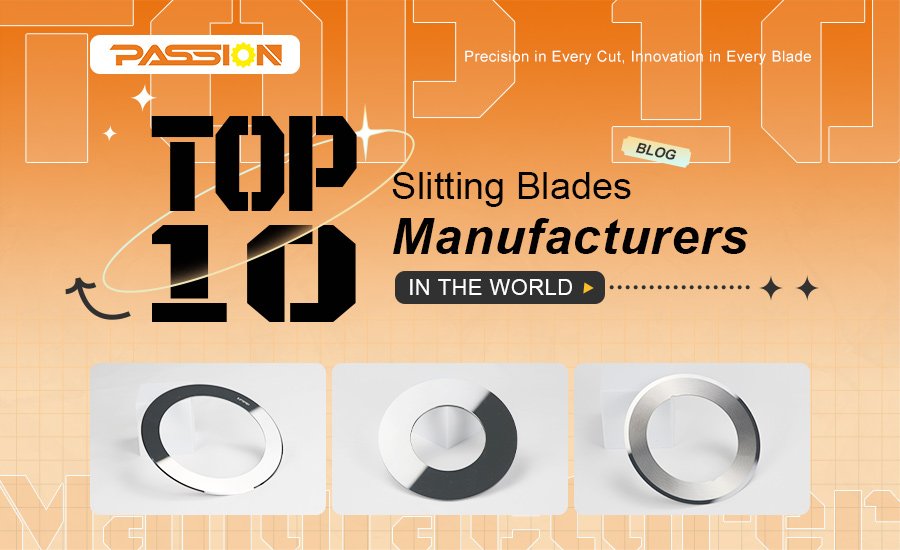
Slitting blades are designed to divide continuous materials into narrower strips or separate individual sections.
Depending on the cutting system, they may use shear cutting, razor cutting, or score cutting principles.
Common applications include:
– Paper and paperboard converting.
– Plastic film slitting.
– Metal coil processing.
– Nonwoven materials.
– Flexible packaging.
The selection of a slitting blade should consider the material being processed, required edge quality, machine configuration, and production speed.
2.4 Serrated and Perforating Blades
Serrated blades have specially shaped teeth along their cutting edges. These teeth can help initiate cuts, engage materials, or create controlled separation patterns.
Perforating blades are designed to produce regularly spaced holes or partial cuts, allowing materials to be torn or separated more easily.
They are frequently used in:
– Packaging films.
– Paper products.
– Labels.
– Flexible packaging.
– Consumer product packaging.
The tooth profile, pitch, cutting depth, and blade material must match the intended perforation pattern and material properties.
2.5 CNC Cutting Blades
CNC cutting blades are designed for digitally controlled cutting systems. They are used to process materials such as foam, rubber, cardboard, textiles, leather, and flexible packaging materials.
Common configurations include drag knives, oscillating knives, tangential knives, and specialty cutting tools.
Unlike conventional machine knives, CNC blades often need to match a specific tool holder, machine platform, and cutting head.
For more information, see our CNC knife blades and complete guide to CNC knife blades.
2.6 Other Specialized Industrial Blades
Many industries require specially designed cutting tools beyond these common categories.
Examples include:
– Slotter blades for corrugated cardboard production.
– Chemical fiber blades for synthetic fiber processing.
– Tobacco cutting blades for cigarette manufacturing equipment.
– Tissue paper log saw blades for tissue converting.
– Guillotine shear blades for sheet materials.
– Food processing blades for cutting and portioning applications.
Each type requires its own combination of material, geometry, and dimensional specifications.
3. What Materials Are Used in Industrial Blades?
Blade material is one of the most important factors influencing service life, cutting performance, and production cost.
Different materials offer different combinations of hardness, toughness, wear resistance, corrosion resistance, and thermal stability. The most suitable choice depends on the workpiece material and operating conditions.
3.1 Tool Steel
Tool steel is widely used in industrial blade manufacturing because it offers a practical balance of hardness, toughness, wear resistance, and machinability.
Different grades are suitable for different working conditions.
For example:
– D2 tool steel is commonly selected for applications requiring good wear resistance.
– SKD11 is frequently used for industrial cutting tools requiring high hardness and dimensional stability.
– Other tool steel grades may be selected where toughness, impact resistance, or corrosion resistance is more important.
The final properties depend on the steel grade and its heat treatment.
Learn more about why tool steel is widely used in industrial blades.
3.2 High-Speed Steel (HSS)
High-speed steel is valued for its hardness, wear resistance, and ability to retain useful mechanical properties under elevated cutting temperatures.
Common grades include M2 and other application-specific HSS grades.
HSS is used in various industrial knives and cutting tools, especially where a balance between edge durability and toughness is required.
Its suitability depends on cutting speed, workpiece properties, edge geometry, and operating temperature.
3.3 Tungsten Carbide
Tungsten carbide is a hard, wear-resistant material commonly used in industrial blades exposed to abrasive materials or demanding production conditions.
Compared with many conventional tool steels, tungsten carbide can offer:
– Higher hardness.
– Excellent abrasion resistance.
– Good edge retention.
– Longer service life in suitable applications.
However, tungsten carbide is generally more brittle than many steel materials. Excessive impact, improper installation, or unsuitable cutting conditions may cause chipping or fracture.
It is therefore important to balance hardness and toughness when choosing carbide blades.
3.4 Powder Metallurgy Steel
Powder metallurgy steel is produced using powder-based manufacturing processes that allow more controlled alloy distribution and microstructure.
Depending on the grade, it can provide a combination of high wear resistance, toughness, and edge stability.
It is often considered for demanding cutting applications where conventional tool steel may not provide sufficient service life.
3.5 Stainless Steel
Stainless steel is used when corrosion resistance is an important requirement.
It can be suitable for applications involving moisture, cleaning chemicals, or hygienic production environments.
However, stainless steel grades vary significantly in hardness, wear resistance, and heat-treatment response. Not every stainless steel grade is suitable for high-wear industrial cutting applications.
How Should You Choose Between Different Blade Materials?
There is no universally best material for every industrial blade.
Consider the following factors:
| Selection Factor | What to Consider |
|—|—|
| Workpiece hardness | Harder materials may require higher blade hardness and wear resistance. |
| Abrasiveness | Abrasive materials can accelerate edge wear. |
| Impact and vibration | Higher toughness may be necessary to prevent chipping. |
| Operating temperature | Thermal stability becomes important in high-temperature cutting. |
| Corrosion exposure | Stainless or corrosion-resistant materials may be preferable. |
| Production volume | Longer service life may justify a higher initial blade cost. |
| Sharpening requirements | Consider whether the material and blade design allow economical resharpening. |
Material selection should always be based on the complete cutting environment rather than hardness alone.
4. What Are the Key Design Parameters of Industrial Blades?
Even when two blades are manufactured from the same material, differences in dimensions and geometry can produce significantly different cutting results.
The following parameters are particularly important.
4.1 Blade Dimensions
The basic dimensions of an industrial blade include:
– Overall length and width.
– Outer diameter.
– Inner diameter or bore size.
– Thickness.
– Mounting hole dimensions.
– Special profiles or cutouts.
These dimensions must match the machine and its mounting system.
An incorrect bore size, for example, may cause installation problems, poor positioning, or excessive vibration.
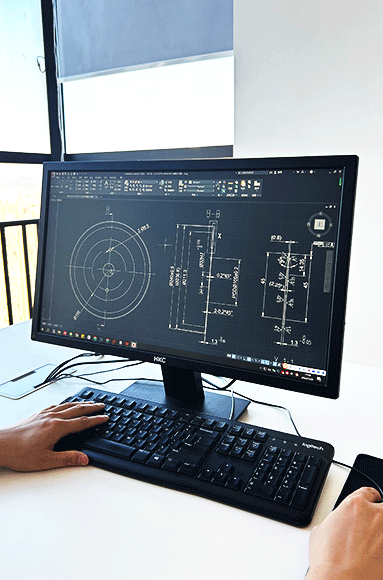
For custom industrial blades, the original drawing or physical sample is often the most reliable starting point.
Our guide to industrial cutting blade drawing parameters explains the dimensional information that should be considered when preparing a blade drawing.
4.2 Cutting Edge Geometry
The cutting edge determines how the blade engages with the workpiece.
Common edge configurations include:
– Single bevel.
– Double bevel.
– Symmetrical edge.
– Asymmetrical edge.
– Serrated edge.
– Specialty stepped or profiled edges.
A single-bevel edge can concentrate cutting force along one side, while a double-bevel edge provides a symmetrical cutting geometry.
The appropriate design depends on the cutting direction, material properties, machine arrangement, and required cut quality.
For a closer look, read the common edge types of industrial blades and the geometric parameters of industrial blades.
4.3 Bevel Angle and Edge Thickness
The bevel angle affects the relationship between cutting sharpness and edge strength.
A smaller angle can create a thinner cutting edge that penetrates certain materials more easily. However, it may also reduce edge strength under demanding conditions.
A larger angle can provide additional support behind the cutting edge, but may increase cutting resistance.
The optimal geometry depends on:
– Workpiece hardness.
– Material thickness.
– Cutting method.
– Blade material.
– Machine force and stability.
A thinner edge does not automatically produce better cutting performance. The relationship between edge thickness, angle, and material properties must be considered together.
4.4 Tolerances and Dimensional Accuracy
Manufacturing tolerances define the acceptable variation in a blade’s dimensions.
Important tolerances may include:
– Thickness tolerance.
– Bore diameter tolerance.
– Outer diameter tolerance.
– Flatness.
– Roundness.
– Concentricity.
– Parallelism.
– Perpendicularity.
These specifications influence blade installation, positioning, cutting consistency, and machine stability.
For example, an incorrectly sized bore can affect the fit between a blade and its shaft. Excessive dimensional variation may also create uneven cutting conditions.
Read more about how tolerance zones influence fit, precision, and performance in industrial blades.
Other important precision characteristics include blade flatness and blade roundness.
4.5 Surface Roughness and Surface Finish
Surface roughness describes the microscopic irregularities on a blade’s surface.
It can influence friction, material adhesion, cleaning, and the interaction between the blade and workpiece.
In applications where material buildup or surface friction is a concern, an appropriate surface finish can help improve cutting consistency.
However, an extremely smooth surface is not always necessary. The required finish should be determined by the application.
Learn more about selecting the appropriate surface roughness for industrial blades and how mirror finishing enhances blade performance and service life.
5. How Are Industrial Blades Manufactured?
Industrial blade manufacturing involves multiple processes that transform raw materials into precision cutting tools.
Although the exact production route varies according to blade design and material, the general manufacturing process includes several major stages.
5.1 Material Selection and Preparation
The manufacturing process begins with selecting a suitable raw material.
Engineers consider the required hardness, toughness, wear resistance, corrosion resistance, and operating environment.
The material is then prepared according to the blade’s dimensions and production requirements.
5.2 Cutting and Rough Machining
The raw material is cut into the required shape and size.
Depending on the material and blade design, manufacturing may involve sawing, laser cutting, waterjet cutting, wire EDM, or other machining methods.
Additional machining operations may be required to produce mounting holes, slots, profiles, and other structural features.
5.3 Heat Treatment
Heat treatment is a critical manufacturing stage for many steel industrial blades.
It modifies the material’s microstructure to achieve the desired hardness and mechanical properties.
Depending on the steel grade, the process may involve:
- Heating to a specified temperature.
- Holding for a controlled period.
- Quenching using an appropriate cooling method.
- Tempering to adjust hardness and toughness.
Improper heat treatment can cause excessive brittleness, distortion, cracking, or inconsistent hardness.
For a deeper explanation, see the detailed guide to the heat treatment process for industrial blades.
Other relevant processes include vacuum heat treatment versus conventional heat treatment and cryogenic treatment for industrial blades.
5.4 Precision Grinding
After heat treatment, grinding is used to achieve the required dimensions, flatness, and cutting-edge geometry.
Grinding operations may include surface grinding, cylindrical grinding, centerless grinding, and profile grinding.
The choice of grinding wheel and grinding parameters affects material removal, surface quality, thermal damage, and dimensional accuracy.
Excessive grinding heat can damage the cutting edge or alter the properties of the material.
Learn more about selecting and using grinding wheels for industrial blade grinding.
5.5 Edge Processing and Finishing
The cutting edge is then processed to achieve the required sharpness and geometry.
Depending on the application, finishing operations may include:
– Fine grinding.
– Honing.
– Micro-edge honing.
– Polishing.
– Mirror finishing.
– Deburring.
These processes help control the final cutting-edge condition and surface quality.
5.6 Special Manufacturing Processes
Some industrial blades require additional processes to achieve particular performance or cost requirements.
For example, inlay welding can combine different materials within a blade structure. A wear-resistant material may be positioned at the cutting area while a more economical material forms the supporting body.
This approach can help balance performance and manufacturing cost in suitable applications.
See how inlay welding enables industrial blades to achieve high performance and cost-effectiveness.
5.7 Inspection and Quality Control
Before delivery, industrial blades should be inspected against their technical specifications.
Common inspection items include:
– Dimensional accuracy.
– Hardness.
– Flatness and parallelism.
– Bore and mounting hole accuracy.
– Cutting-edge condition.
– Surface finish.
– Visual defects.
– Material and heat-treatment consistency.
The inspection method should match the blade’s design and application requirements.
For additional guidance, read what to pay attention to when inspecting industrial blades.
6. What Industries Use Industrial Blades?
Industrial blades are used across a wide range of manufacturing and processing industries. Each industry has its own material characteristics, production requirements, and cutting challenges.
6.1 Packaging and Printing
Packaging and printing manufacturers use industrial blades for slitting, trimming, perforating, cutting, and converting paper, cardboard, plastic films, and other packaging materials.
Blade performance directly affects cut quality, production speed, and material waste.
Common blade types include circular slitting knives, perforating blades, straight blades, and specialty packaging knives.
6.2 Corrugated Cardboard Industry
Corrugated cardboard production requires reliable cutting tools for slitting, scoring, slotting, and trimming.
Slotter blades and circular slitting knives are commonly used in corrugated converting equipment.
Their cutting performance influences edge quality, board dimensions, and production efficiency.
6.3 Tobacco Industry
Tobacco manufacturing requires precision cutting tools for processing tobacco leaves, cigarette rods, filters, and other tobacco-related materials.
Blade geometry, sharpness, material selection, and surface finish are important for achieving consistent cuts and stable production.
6.4 Metal Processing
Metal processing applications include coil slitting, sheet shearing, trimming, and other material separation operations.
The blade must withstand the cutting forces and wear conditions associated with the specific metal being processed.
Material selection, blade clearance, hardness, and edge geometry are especially important.
6.5 Chemical Fiber and Textile Industry
Chemical fiber processing involves cutting synthetic fibers, filaments, yarns, and textile materials.
Specialized blades may include three-hole blades, slotted razor blades, and other fiber-cutting knives.
The blade must maintain a stable cutting edge while minimizing fiber deformation, fraying, and inconsistent cutting.
6.6 Food Processing
Food processing blades are used for slicing, dicing, trimming, portioning, and cutting different food products.
Depending on the application, manufacturers may prioritize corrosion resistance, hygiene, cleanability, and material compatibility.
6.7 Lithium Battery and New Energy
Lithium battery manufacturing uses precision slitting and cutting tools to process electrode materials and other thin functional materials.
Cutting quality is critical because burrs, dimensional deviations, and edge defects may affect subsequent manufacturing operations.
6.8 Paper and Tissue Processing
Paper converting operations use industrial blades for slitting, trimming, rewinding, and cutting paper products.
Tissue production may require specialized log saw blades and circular knives capable of maintaining consistent cutting quality at high production speeds.
For a broader industry overview, see industrial blade applications across ten key industries.
7. How to Choose the Right Industrial Blade?
Choosing the right industrial blade requires more than matching a product name or copying the dimensions of an existing blade.
A reliable selection process should consider the complete cutting system.
Step 1: Identify the Material Being Cut
Start by identifying the workpiece material.
Important properties include:
– Hardness.
– Thickness.
– Density.
– Abrasiveness.
– Toughness.
– Chemical composition.
– Moisture content.
– Temperature.
Different materials create different cutting forces and wear conditions.
For example, cutting thin plastic film requires a different blade configuration from shearing thick metal sheets.
Step 2: Understand the Cutting Method
The cutting method determines how the blade interacts with the material.
Common methods include:
– Shear cutting.
– Razor cutting.
– Crush cutting.
– Guillotine cutting.
– Rotary cutting.
– Reciprocating cutting.
– Perforating.
Each method has different requirements for edge geometry, blade positioning, clearance, and cutting force.
You can explore these differences in the guide to industrial blade cutting methods.
Step 3: Match the Blade Material to the Application
Select a material based on the required balance between wear resistance, toughness, corrosion resistance, and cost.
Do not choose a material based only on its hardness rating.
For example, a highly wear-resistant carbide blade may perform well in an abrasive application, but a tougher steel blade may be more suitable where impact loading is present.
Step 4: Confirm Machine Compatibility
Check the machine’s technical requirements before ordering a replacement blade.
Important specifications include:
– Blade diameter or overall dimensions.
– Thickness.
– Bore diameter.
– Mounting holes.
– Cutting-edge configuration.
– Installation direction.
– Operating speed.
– Blade clearance.
– Machine holder or shaft compatibility.
Even a blade with excellent material properties may perform poorly if it does not fit the machine correctly.
Step 5: Consider Operating Conditions
Operating conditions can significantly influence blade performance.
Consider:
– Cutting speed.
– Feed rate.
– Applied pressure.
– Temperature.
– Vibration.
– Lubrication or cooling.
– Continuous or intermittent operation.
For example, cutting speed and feed rate should be considered together rather than adjusted independently.
See how cutting speed and feed rate are related in industrial blade machining.
Step 6: Evaluate Total Operating Cost
The cheapest blade is not necessarily the most economical option.
A blade with a lower purchase price may require more frequent replacement, sharpening, or production interruptions.
A better evaluation considers:
– Initial purchase price.
– Service life.
– Sharpening costs.
– Replacement frequency.
– Production downtime.
– Material waste.
– Cutting consistency.
The objective is to reduce the total cost per unit of production while maintaining the required cutting quality.
Step 7: Consider Custom Industrial Blades
Standard blades are suitable for many applications, but some machines require non-standard dimensions, special edge profiles, or application-specific materials.
In these situations, custom manufacturing may provide a better solution.
A professional industrial blade manufacturer should be able to evaluate drawings, samples, material specifications, and machine requirements before recommending a suitable design.
Explore our custom industrial knife blade manufacturing service.
8. How to Maintain Industrial Blades for Longer Service Life
Even a high-quality industrial blade requires proper maintenance to maintain its performance.
Incorrect installation, excessive cutting pressure, contamination, and improper sharpening can shorten blade life.
8.1 Install Blades Correctly
Before installation:
– Check the blade for visible damage.
– Clean the mounting surface and blade holder.
– Confirm that the blade dimensions match the machine.
– Check the installation direction.
– Apply the correct clamping force.
– Verify alignment and positioning.
For machines using multiple blades on the same cutter body, consistent positioning and clamping are particularly important.
See the installation and positioning considerations when mounting multiple industrial blades.
8.2 Monitor Cutting Performance
Do not wait until a blade fails completely before checking its condition.
Warning signs may include:
– Increased cutting resistance.
– Rough or inconsistent cut edges.
– Burr formation.
– Excessive vibration.
– Increased operating temperature.
– Reduced production efficiency.
– Visible edge wear or chipping.
Regular monitoring helps identify problems before they cause more serious production interruptions.
8.3 Sharpen Blades Properly
Many industrial blades can be resharpened, depending on their material, geometry, and remaining usable dimensions.
However, sharpening should follow the blade manufacturer’s recommendations.
Important factors include:
– Grinding wheel selection.
– Grinding pressure.
– Cooling conditions.
– Material removal.
– Edge angle.
– Final edge finish.
Excessive pressure or grinding heat may damage the cutting edge.
8.4 Store Blades Properly
When blades are not in use:
– Clean them before storage.
– Apply suitable rust protection when necessary.
– Keep cutting edges protected.
– Avoid direct contact between blades.
– Store them in a dry and stable environment.
– Label blades to prevent incorrect installation or use.
8.5 Replace Blades When Necessary
Resharpening is not always the best solution.
If a blade has excessive wear, cracks, severe chipping, dimensional loss, or structural damage, replacement may be necessary.
The decision should consider the remaining usable blade dimensions, repair cost, safety, and production requirements.
For more maintenance guidance, see how to maintain industrial blades for optimal sharpness and efficiency.
9. What Should You Look for in an Industrial Blade Manufacturer?
Choosing a reliable industrial blade manufacturer is just as important as selecting the correct blade material and design.
A capable supplier should provide more than a product that matches the required dimensions.
Consider the following factors.
9.1 Manufacturing Experience
Look for a manufacturer with experience producing blades for your specific industry or cutting application.
Different industries require different technical knowledge, manufacturing processes, and quality standards.
9.2 Material and Process Control
Ask whether the manufacturer can provide suitable material recommendations and control critical production processes, including heat treatment, precision grinding, and edge finishing.
These processes directly influence blade consistency and performance.
9.3 Customization Capabilities
A suitable manufacturer should be able to work with:
– Technical drawings.
– Existing blade samples.
– Machine specifications.
– Material requirements.
– Hardness requirements.
– Special edge geometries.
– Dimensional tolerances.
Customization is particularly important when standard replacement blades do not meet the requirements of a specific machine.
9.4 Quality Inspection
Check whether the supplier has inspection procedures for dimensions, hardness, flatness, surface finish, and cutting-edge quality.
For critical applications, inspection records and agreed technical specifications can help reduce the risk of inconsistent batches.
9.5 Communication and Technical Support
A reliable manufacturer should be able to discuss technical requirements, identify potential compatibility issues, and recommend practical solutions.
This is especially important for OEM and customized industrial blades.
For a deeper discussion, see what an OEM industrial blade is and what to consider when selecting a supplier.
10. Frequently Asked Questions About Industrial Blades
Q1. What Are Industrial Blades Used For?
Industrial blades are used to cut, slit, shear, trim, perforate, and process materials in manufacturing environments.
Common applications include paper converting, packaging, metal processing, tobacco manufacturing, textile production, food processing, and plastic film production.
Q2. What Is the Best Material for Industrial Blades?
There is no single best material for every application.
Tool steel, high-speed steel, tungsten carbide, powder metallurgy steel, and stainless steel all offer different performance characteristics.
The best choice depends on the workpiece material, cutting speed, wear conditions, impact loads, and required service life.
Q3. How Long Do Industrial Blades Last?
Industrial blade service life varies according to material, blade geometry, workpiece properties, cutting conditions, machine accuracy, and maintenance practices.
A blade used to process abrasive materials at high production speeds may wear much faster than one used in a less demanding application.
Regular inspection and appropriate maintenance help maximize usable blade life.
Q4. Can Industrial Blades Be Resharpened?
Many industrial blades can be resharpened, provided they have sufficient remaining material and no serious structural damage.
However, the resharpening method must match the blade material and geometry.
Some blades may need replacement when their dimensions fall outside acceptable limits or when cracks and severe edge damage are present.
Q5. Why Do Industrial Blades Wear Out So Quickly?
Common causes include:
– Incorrect blade material.
– Unsuitable edge geometry.
– Excessive cutting pressure.
– Incorrect cutting speed or feed rate.
– Poor blade alignment.
– Workpiece contamination.
– Improper sharpening.
– Excessive operating temperature.
Identifying the actual cause is more effective than simply replacing the blade with a harder material.
Q6. Are Custom Industrial Blades Better Than Standard Blades?
Custom blades are not automatically better than standard blades.
Standard blades are often more economical and suitable when their specifications match the application.
Custom blades are useful when a machine requires special dimensions, non-standard mounting features, specific materials, or customized edge geometry.
The right option depends on the technical requirements and production objectives.
Q7. What Information Is Needed to Order Custom Industrial Blades?
To evaluate a custom blade requirement, manufacturers generally need:
- A technical drawing or physical sample.
- Blade dimensions and tolerances.
- Required material or application details.
- Hardness requirements, if specified.
- Cutting-edge geometry.
- Machine model or installation information.
- Workpiece material and operating conditions.
Providing this information helps the manufacturer evaluate the application and recommend an appropriate solution.
Conclusion: Choose Industrial Blades Based on the Complete Cutting Application
Industrial blade performance is determined by the interaction of material properties, blade geometry, manufacturing quality, machine compatibility, and operating conditions.
A suitable blade should not only provide a sharp cutting edge. It must also maintain dimensional accuracy, withstand the working environment, deliver consistent cutting quality, and provide an economical service life.
When selecting industrial blades, start by understanding the material being processed and the cutting method. Then evaluate blade material, edge geometry, machine compatibility, and operating conditions.
For specialized applications, working with an experienced industrial blade manufacturer can help you identify the right combination of materials, dimensions, and manufacturing processes.
Looking for industrial blades for your specific application?
PASSIONBLADE provides industrial knife and blade solutions for packaging, printing, corrugated cardboard, tobacco, CNC machining, chemical fiber, and other manufacturing industries.
Whether you need standard replacement blades or custom industrial cutting knives, our team can evaluate your drawings, samples, and technical requirements to help identify a suitable solution.
Contact PASSIONBLADE to discuss your industrial blade requirements. </div>
</div>
</div>
</div>
</div>